
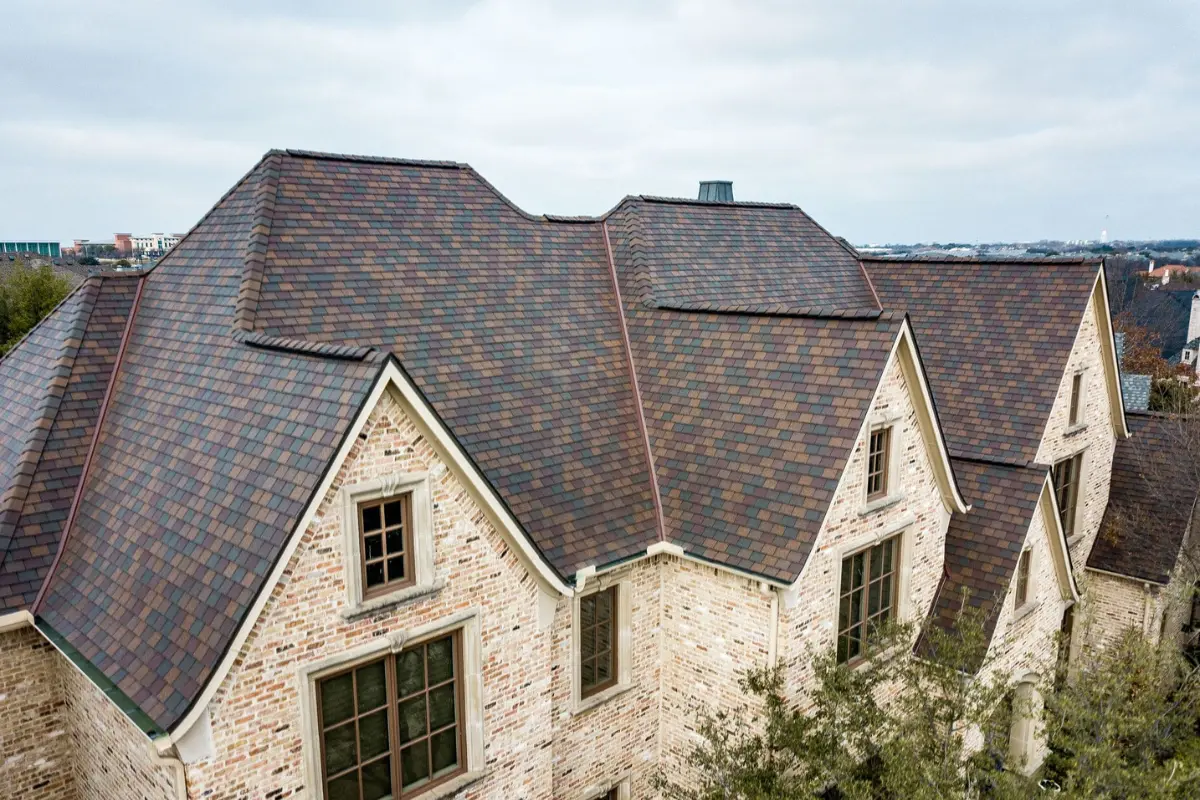
Hail Damage Roof Repair in San Antonio
Most hail marks on a roof are cosmetic. The ones that aren’t will cost you a roof.
How to tell the difference, when repair is the right call, and what Texas insurance actually pays for.
Functional damage vs. cosmetic marks
Insurance, and the actual service life of your roof, turn entirely on this distinction.
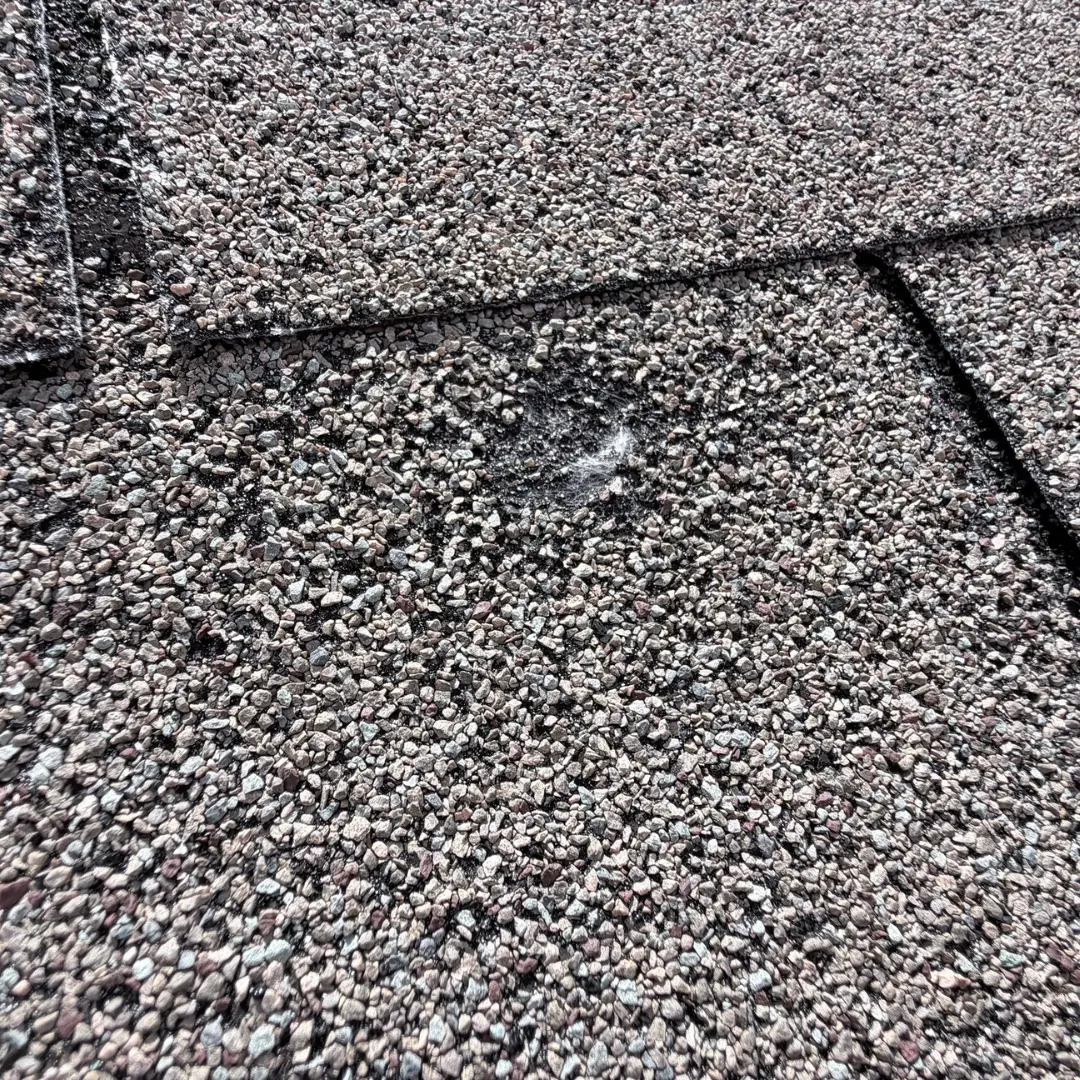
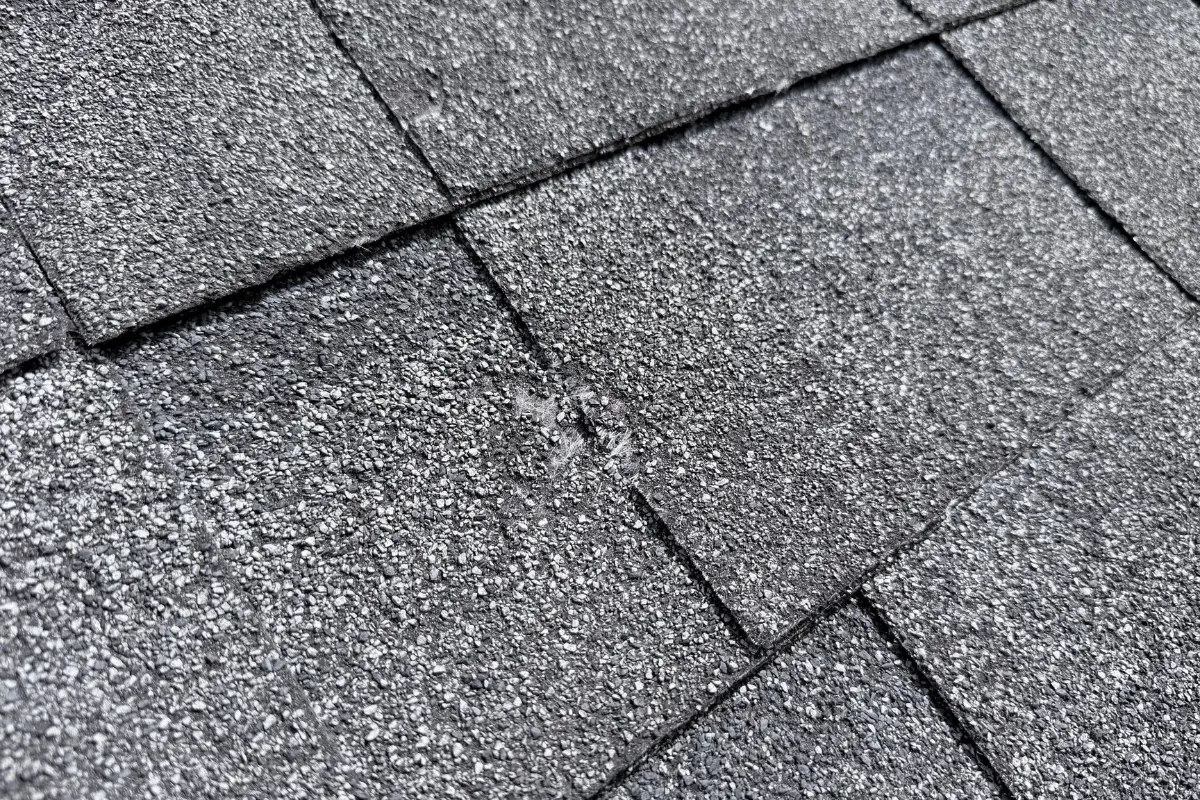
Bruising that fractures the fiberglass mat beneath the granules. Granule loss that exposes black asphalt. Cracked or punctured shingles. Damage to the sealant strip that holds each course down in wind.
This shortens the roof’s service life, and it is what insurance pays for.
Scuffs, marred granules with no mat fracture underneath, and dents in gutters, vents, and AC condenser fins. These look bad and do not shorten roof life.
Many Texas policies now carry a cosmetic damage exclusion endorsement, which means the marks are visible and uncovered at the same time.
Hail size and what it does
A rough guide to when impact starts fracturing the shingle mat.
- Under 1"
- Rarely damages asphalt shingles. Can mark soft metals such as gutters, vents, and condenser fins.
- 1" to 1.25"
- Damage becomes possible on older or weathered roofs. Worth an inspection, particularly on roofs past ten years.
- 1.25" to 1.75"
- Functional damage is common on standard 3-tab and architectural shingles.
- 1.75" and above
- Functional damage is likely, and full replacement is often warranted.
Hail size is only one variable. Wind speed, impact angle, shingle age, and the direction a slope faces all change the outcome. That is why an actual inspection beats a hail map.
Repair or replace?
Repair is the right call when the damage is confined to one slope or a small number of shingles, the roof is under roughly ten years old, and the original shingle is still being manufactured in a color that matches. Those three conditions are what make a repair invisible and durable rather than a patch that telegraphs its own location.
Replacement becomes the right answer when the damage spans multiple slopes, the roof is near the end of its service life, or discontinued shingles make a matched repair impossible. Insurers usually pay to replace an entire slope when a practical repair is not available, and in many cases that math extends to the full roof.
The number worth calculating is cost per year of life gained. A partial repair on a fifteen-year-old roof might cost two thousand dollars and buy five more years. A replacement costs far more up front but buys twenty-five. On an aging roof, the repair frequently loses that comparison. Our roof cost guide has the current ranges to run it yourself.
How a Texas hail claim actually works
- 1. Document before you call anyoneDated photos of the roof, gutters, window screens, and any soft metal. Photograph the hail itself next to a coin if it is still on the ground.
- 2. Get an independent inspectionHave a licensed roofer produce a written damage report before you file. A report written before the claim carries more weight than one produced to argue with a denial.
- 3. File if the damage is functionalTwo clocks run from the date of loss: your policy's notice provision, commonly one year but varying by carrier, and the two-year limitations period Texas law sets for suing an insurer. Report promptly and check your policy language. Cosmetic marks alone are not grounds for a claim.
- 4. Meet the adjuster on the roofA typical adjuster inspection runs about twenty minutes across an entire roof. Soft mat bruising is easy to miss at that pace, and having your roofer present changes what gets recorded.
- 5. If denied, request re-inspectionAsk for a re-inspection with your roofer present and bring documented evidence. Denials based on a short first inspection are frequently reversed.
Read more about how roof insurance claims work in Texas, including ACV vs RCV, supplements, and recoverable depreciation.
Related: How appraisal works if your claim is partially paid
One thing worth knowing before you take a bid: it is a criminal offense in Texas for a contractor to waive, rebate, or absorb a homeowner’s insurance deductible. Anyone offering to eat your deductible is asking you to participate in insurance fraud, and the exposure lands on you as well as them. Read more about the Texas deductible law.
Recent hail storm reports
Confirmed storm paths from the National Weather Service and local spotters, kept separate from our verified multi-year hail record.
Converse, TX hail storm
Largest reported hail: 2.5". Peak gust: 60 mph. Preliminary NWS and local storm reports.
See the confirmed storm path and reportsHail damage by area
Storm behavior, roof stock, and carrier patterns differ across Central Texas.
Hail Alley's southern edge, with large-diameter events every few years.
San Antonio roofing guideElevated Hill Country terrain that regularly takes the leading edge of storms.
Bulverde roofing guideFrequent supercell tracks along I-10 and a large stock of steep-pitch roofs.
Boerne roofing guideFast growth means many roofs are now hitting their first serious hail season.
New Braunfels roofing guideOpen terrain east of the metro with a mix of older and low-slope roofs.
Seguin roofing guideOpen corridor terrain east of San Antonio with a large stock of production roofs at end of life.
Cibolo roofing guideFar West Side exposure where west-facing slopes take the worst of both hail and sun.
Alamo Ranch roofing guideNorthern reach of our service area, with its own distinct storm tracks.
Austin roofing guideHill Country hail, with May the peak month for reports.
Fredericksburg roofing guideRelated reading
5 years of verified NOAA storm data — how often it actually hits, and how hard.
ReadWhat impact does to a shingle at the material level.
ReadHow impact ratings are tested and what the discount is worth.
ReadWind, tree, and wind-driven rain damage, plus the full insurance timeline.
ReadWhat a real inspection covers, and what you get in writing.
ReadACV vs RCV, supplements, and when depreciation is released.
ReadHail damage FAQs
Let's check your roof for hail damage.
No pressure, no obligation. Calls answered 24/7 in English & español by Alex, our AI specialist · Get an engineer-led 53-point roof inspection, not a sales pitch.