Boerne is where we most often talk homeowners out of the default asphalt shingle. Not because shingles are bad — they're the right answer for most Central Texas roofs — but because Hill Country exposure genuinely rewards standing seam metal, tile, and higher-spec Class 4 systems in ways that the flatter suburbs don't.
Wind load is a structural conversation
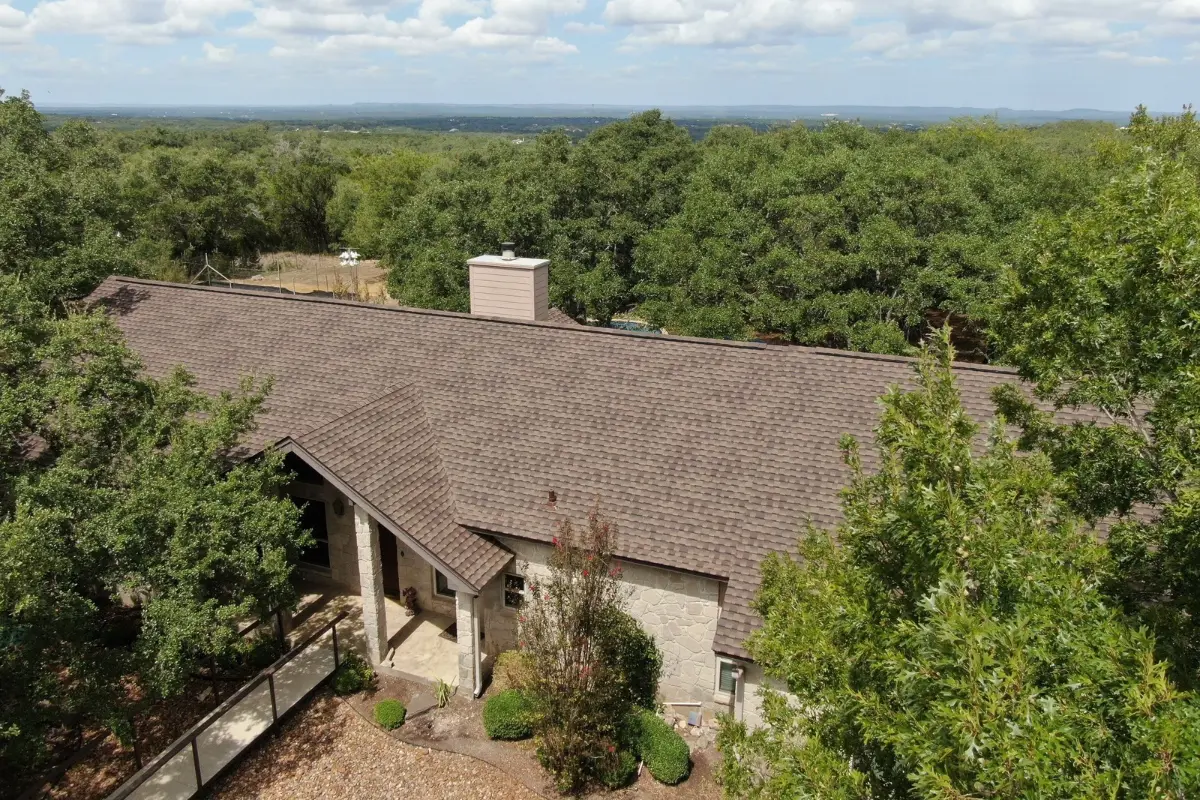
A hilltop lot in Fair Oaks Ranch sees different uplift than a sheltered street in downtown Boerne. Fastener schedule and edge detail have to reflect that. On ridge-line custom homes we typically add extra ring-shank nails per shingle and use starter strip along every rake, not just the eaves.
Metal is not "better" — it's differently suited
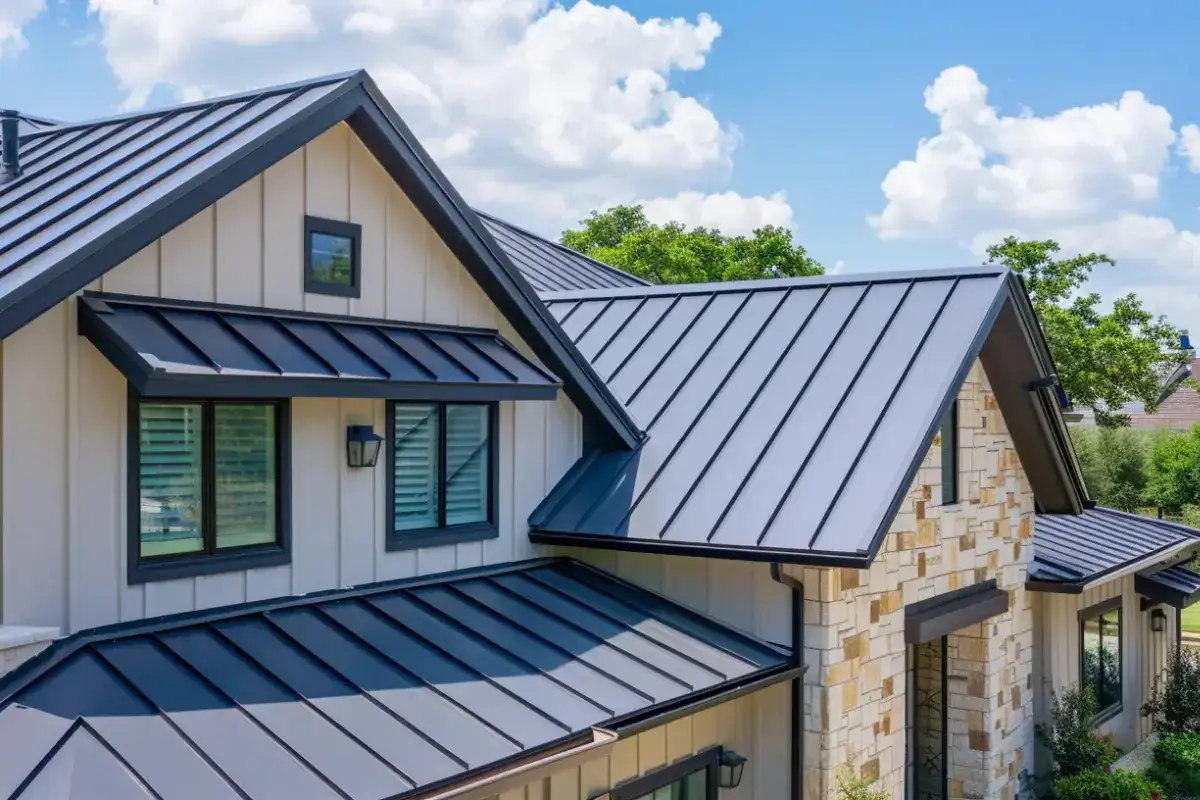
Standing seam Galvalume on a Boerne home gives you 40–50 years of life, fire resistance, and excellent wind performance. It costs 2–3x an equivalent asphalt install. That math works on a custom home you plan to keep; it doesn't necessarily work on a starter home you'll sell in six years.
Ventilation on complex geometries
Cathedral ceilings, vaulted great rooms, and open-truss barndos need ventilation designed to the assembly, not defaulted to a soffit-and-ridge template. We regularly redesign ventilation as part of a Cordillera Ranch or Anaqua Springs reroof.
Check the Historic District first
On an older home near Main Street, the first step is checking whether it sits in the Historic District. If it does, we plan the roof around the city's Historic District Guidelines. A roof replaced with the same materials generally doesn't need a Certificate of Appropriateness. A new material, color or roof shape does. The commission meets once a month, so a change can add a few weeks before work starts.