
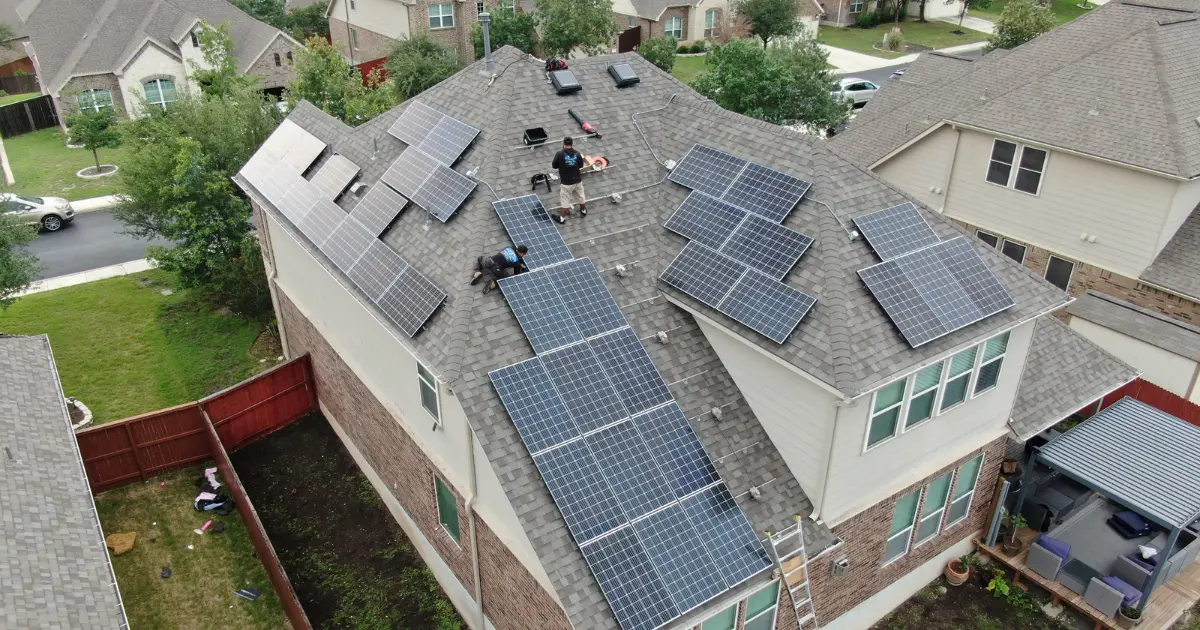
Solar Panel Detach & Reset for Roof Replacement in San Antonio
Need a new roof under your solar panels? We coordinate the whole job: panels off and stored, new roof, new flashing at every mount, panels back on.
- New flashing at every mount, no caulk shortcuts
- Panels labeled by position & stored safely
- Our licensed solar team handles the electrical, or your installer if under warranty
Free roof & solar inspection
A few quick questions so we arrive knowing what your roof and array need.
How we handle it
- 1Electrical shutdown (our licensed solar team, your solar provider, or a licensed electrician)
- 2Panels off, labeled & stored
- 3Tear-off & new roof
- 4New mounts, new flashing at every penetration
- 5Panels reset, reconnected & checked for production
Typical time offline: about 3–7 days.
A real detach & reset, start to finish
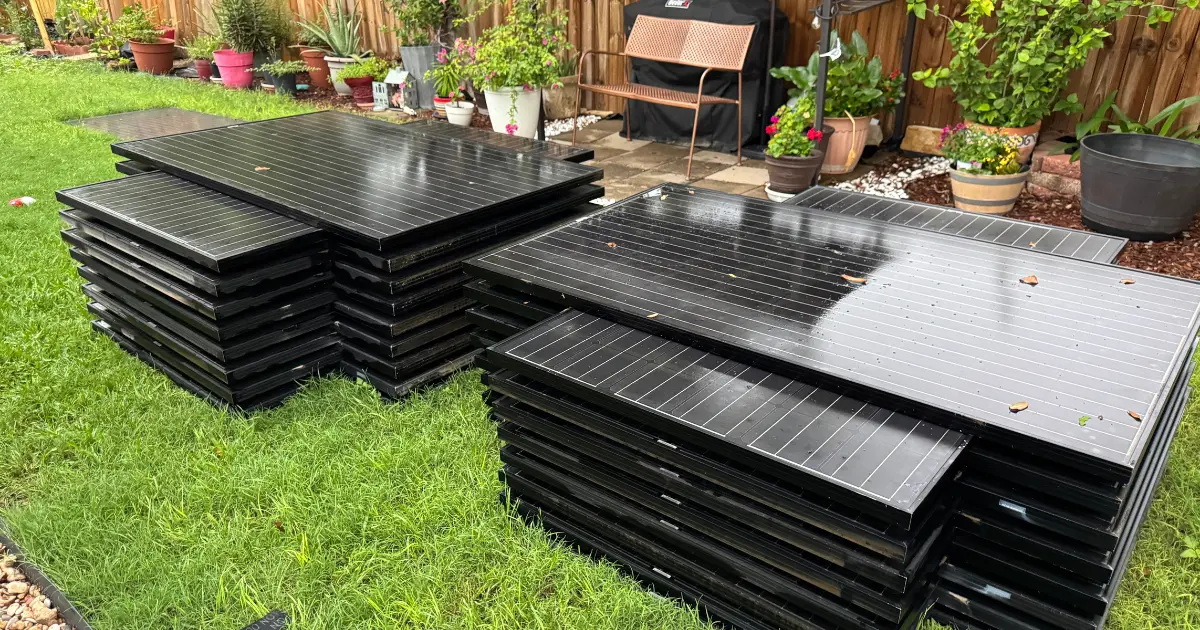
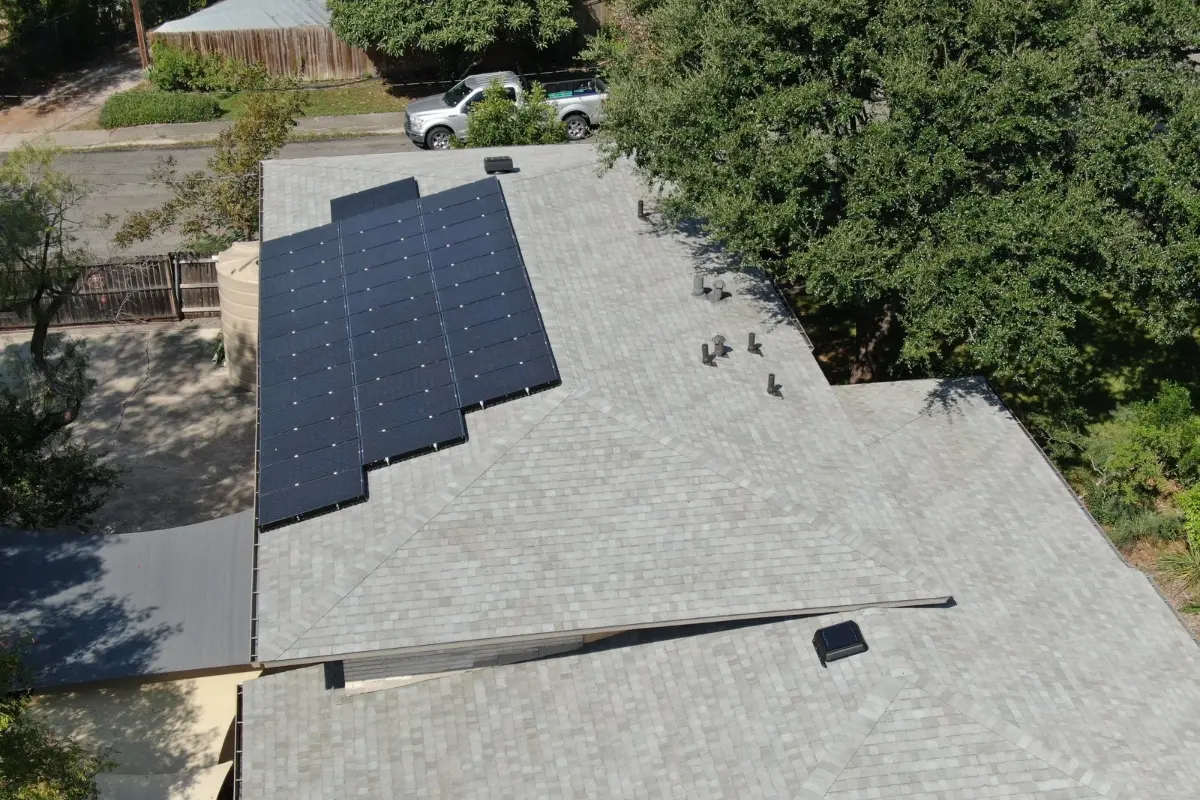
North Shearer Hills, San Antonio 78216
- 34 panels
- 40-square main house and shop
- Completed September 23, 2026
"The coordination between the roofing and solar teams was smooth, and I never felt like I had to worry about whether my solar system was in good hands."Read the full case study



Hail damage on a roof with solar?
If your roof replacement is part of an insurance claim, the detach & reset may be covered as part of the claim, depending on your policy. We'll document the roof and the array so it can be considered. How insurance works with us

Your panels will outlast your roof. Plan for that before you install them.
Two service lives that do not line up, and a bill that arrives years later.
A solar array is designed for twenty-five to thirty years. An asphalt shingle roof in Central Texas takes sun, heat, and hail. It realistically lasts fifteen to twenty-five years. Those two numbers do not line up, and the gap between them is where the expense lives. Most homeowners discover this the way everyone discovers roofing problems: a leak appears under an array that still has fifteen good years on it.
The most useful sentence on this page is this one: if your roof is within about five years of the end of its service life, replace it before you install solar, not after. Doing it in that order costs you a roof you were going to buy anyway. Doing it in the other order costs you the roof plus a detach and reset, and it puts your array in storage for several days.
So before you sign a solar contract, have the roof inspected. Get a written estimate of its remaining life. It should note the roof's age, the deck's condition, and any existing damage. That number, not the solar quote, should decide the sequence. We will give you that number through a free inspection, and if the answer is that your roof is fine for another decade, that is what we will write down.
It is worth saying plainly that solar companies are generally not roofing contractors. They are competent at arrays and mostly not in the business of evaluating a roof's remaining life, and the question rarely comes up during a solar sale. That is not usually bad faith. It is simply outside their scope. It is squarely inside ours. If a replacement is close, the cheapest version of this whole project is the one where the roof goes on first.
What detach and reset actually involves
Six stages, two trades, and one detail that determines whether the roof leaks: the mount penetrations.
- 1. System shutdown and electrical disconnect
Our licensed solar team, your solar provider, or a licensed electrician shuts the system down at the inverter and the array. This happens before the roofing crew steps on the roof.
- 2. Panel removal and labeled staging
Panels come off in order and are labeled by position and string so the array goes back exactly as designed. They stay on site when there is safe space. If not, they are transported and stored, which is a real cost line.
- 3. Racking and mounting hardware removal
Rails, clamps, and roof-penetrating feet come off. Rails and clamps are frequently reusable. The feet and their flashings are not, because they were sealed into a roof that is about to be removed.
- 4. Roof replacement, with new flashing at every mount penetration
Tear-off, deck inspection, underlayment, and the new roof go in as normal. The difference: every spot where a mount will land is treated as a penetration detail, not a plain shingle.
- 5. Racking reinstalled on new, properly flashed mounts
New feet, new flashings, integrated into the new shingle courses so water runs over the detail. Old penetrations are not reused and old sealant is not relied on. This step is the whole point of the exercise.
- 6. Panel reinstall, reconnection, and commissioning
Panels return to their labeled positions, our licensed solar team, your solar provider, or an electrician reconnects and commissions the system, and production is verified against expectation before the job is called finished.
The penetrations are the whole point. Every rack foot is a hole through the water plane, and a residential array typically has dozens of them. Reusing old flashing, or sealing a new mount into an old hole, is the same mistake as reusing a skylight flashing kit. It holds for a few seasons, and then it fails. New mounts, new flashings, woven into the new shingle courses. There is no shortcut that is still a roof.
Who does what
One call, one schedule, clear roles.
You make one call. We build the schedule: our licensed solar team or your solar provider for shutdown, detach and reconnection, our roofing crew for the roof and every mount penetration. Nobody stands on a torn-off roof waiting for someone else to show up.
We have our own licensed solar team. You can see how it went on a real job: the North Shearer Hills project.
The electrical side, meaning shutdown, disconnection at the inverter and array, reconnection, commissioning, and production verification, is handled by our licensed solar team, your solar provider, or a licensed electrician. Our roofing crew handles the roof and the mount flashing, not the electrical work.
Which brings up the warranty question. If your system is still under warranty, the original installer or their authorized partner should usually do the detach and reset. Unauthorized handling can void coverage on panels, inverters, or workmanship. If it is out of warranty, our licensed solar team can handle it. That is not a detail to discover afterward.
Planning solar on a metal roof?
If a new roof is on the table before solar goes up, standing seam metal changes the math.
Standing seam metal is the only metal system we install. Solar racking for a standing seam roof is typically clamped to the raised seams instead of bolted through the panels, so the array does not add dozens of roof penetrations to flash.
That matters for the sequencing problem above. A roof planned with the array in mind means fewer reasons to pull the panels off later. If you are weighing a shingle roof against standing seam before installing solar, ask us to cover both in your free inspection.
Read more about our standing seam metal roofing or request a free inspection.
What it costs
Priced per panel, and it adds meaningfully to a roof replacement.
We quote detach and reset per panel, usually about $250 to $350 per panel. A single-panel detach and reset has a $250 minimum. Every job includes calibration and cleanup. A typical residential array of twenty to thirty panels therefore adds several thousand dollars to a roof replacement, and a large array can add considerably more.
Four things move that number. Panel count is the obvious one. Roof pitch and access matter because a steep or hard-to-reach slope slows every stage. Staging matters. Safe space on site keeps cost lower. If panels must be transported and stored, that adds handling and storage. And the condition of the racking matters, since reusable rails cost less than a full hardware replacement, though the roof-penetrating feet and flashings are replaced regardless.
Detach & reset is quoted as its own line item on your written roof proposal, so there are no surprise fees later. For how the underlying roof project is priced, see roof costs.
Solar and roofing FAQs
Related reading
What a full replacement involves, and how the deck and flashing details are handled.
ReadGet a written remaining-service-life number before you sign a solar contract.
ReadWhat a Central Texas roof costs, and what drives the spread between quotes.
Read34 panels off and back on in North Shearer Hills, San Antonio.
ReadPlan your solar detach & reset.
No pressure, no obligation. Calls answered 24/7 in English & español by Alex, our AI specialist · Get an engineer-led 53-point roof inspection, not a sales pitch.