
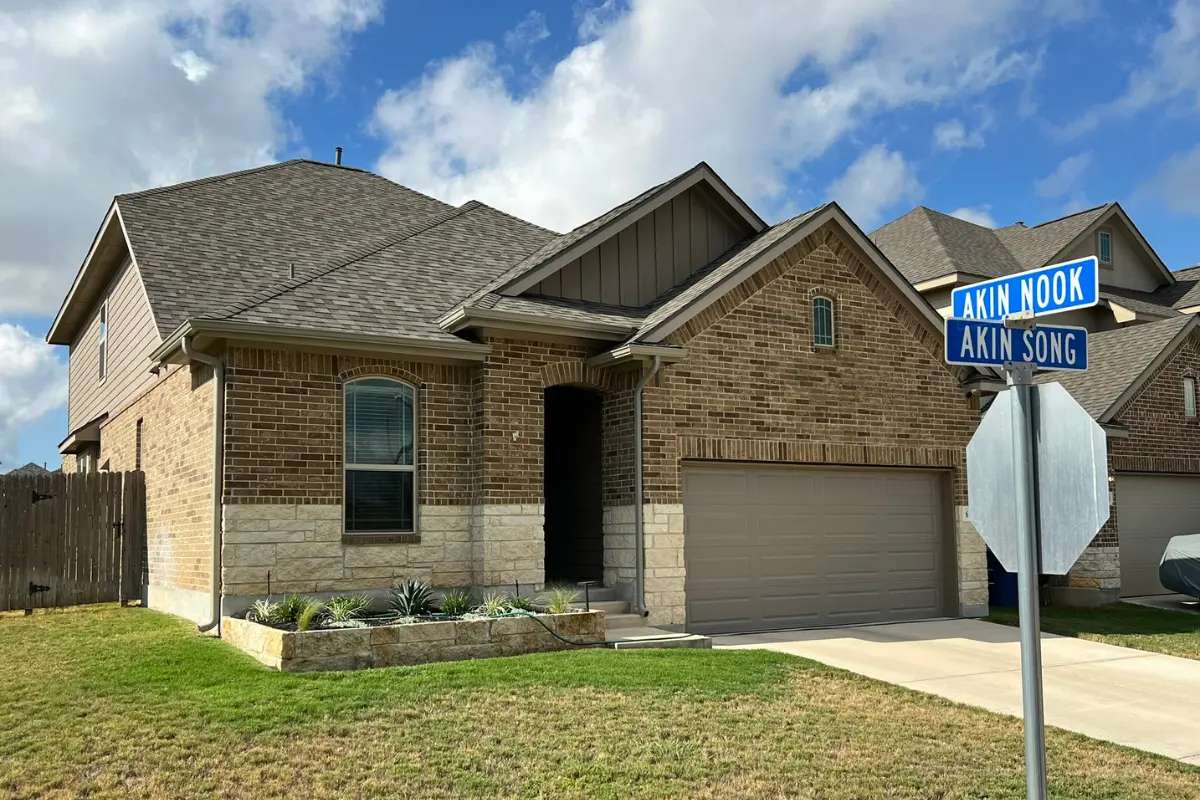
Atrium Roofing crew installing an engineer-led roofing system on a San Antonio residence.
Blanco County · Hill Country · Roofing knowledge center

The Complete Roofing Guide for Blanco

The hardest roofing problem in Blanco is not the weather. It is that almost nobody who works on your roof lives within thirty miles of it — and a warranty is only worth the willingness of someone to drive out and honor it.
Local introduction

Roofing in Blanco, and why it isn't like anywhere else

Blanco is a town of roughly two thousand people on US-281, about fifty miles north of San Antonio and roughly equidistant from San Antonio, Austin, and Fredericksburg. It sits on limestone and thin caliche along the Blanco River, with a courthouse square built around the 1885 Blanco County Courthouse and a mix of genuinely old town building stock, ranch and small-acreage property, and newer subdivision development on the edges.

There is almost no local roofing capacity. Everyone who works here drives in, and that single fact shapes more homeowner outcomes in Blanco County than hail, wind, or material selection combined. It determines who bids your job, how many bids you get, how the price is set, and — most importantly — whether anyone answers the phone two years later when a pipe boot fails. We think that deserves to be discussed plainly rather than treated as an awkward detail.

Climate & weather

How Blanco weather actually loads your roof

Limestone underfoot means the soil largely leaves your roof alone. What remains is sun, wind, hail, cedar, and the logistics of getting a crew here at all.

Hail on the 281 corridor
Blanco County takes recurring 1"–2" hail with larger events on record. Impact rating matters on asphalt and panel gauge matters on metal.
Ultraviolet exposure at elevation
Thin canopy on acreage and ridge lots means south and west slopes take an unshaded load all day and age years ahead of the north side of the same roof.
Wind on open ranch positions
Properties on open ground and ridgelines have no upwind obstruction. Ridge caps, rake edges, and metal panel terminations move first.
Wildfire in the Ashe juniper
Cedar carries fire readily across this county. Ember intrusion at vents, soffits, and debris-packed valleys is the realistic failure mode, not flame contact.
Thin caliche over limestone
Minimal seasonal soil movement. Chimney and wall flashing failures in Blanco are usually age or workmanship, not foundation movement.
River-corridor drainage
The Blanco River and its tributaries drop fast in a heavy rain event. Roof water is a small share of that, but gutter discharge routing on sloped lots still matters and is routinely done badly.
Common problems

What we see most often on Blanco roofs

Orphaned warranties from storm-cycle crews
After a regional hail event, out-of-town crews saturate Blanco County, work fast, and leave. Two years later the entity that installed the roof cannot be reached, or will not make the drive for a service call.
Exposed-fastener metal at the re-screw decision
Screws back out under thermal cycling and gaskets harden. Each fastener becomes a leak path, and whether a re-screw is honest depends on whether the holes have elongated.
Wind-lifted ridge and rake detail
Open ranch and ridge positions take sustained wind with no obstruction. Caps lift at the corners first, and once water gets under the field from the top, the failure runs downhill.
Plank decking in the historic core
Older downtown houses have board decking with gaps rather than modern sheathing. Fastener holding is inconsistent and re-decking is frequently the correct call, which surprises homeowners quoted from a drive-by.
Low-slope porch roofs shingled instead of membraned
Historic wraparound porches routinely sit below the minimum slope for shingles. They get shingled anyway, hold water, and leak at the wall line within a few years.
Combustible eave and vent detailing
Open soffits, unscreened vents, and debris in valleys are the actual wildfire entry points on cedar-adjacent Blanco County acreage.
Gutter discharge cutting back toward the structure
On Hill Country grade, an undersized or badly terminated downspout dumps water where it channels toward the house instead of away from it.
Diagnosing something specific? Our roof problem guide walks through leaks, granule loss, sagging, and ventilation failures step by step.
Engineer's perspective

Why roofs actually fail — from a systems point of view

Atrium Roofing is engineer-led. Here's how we think about your roof as a system, not a stack of shingles.

We will start with the thing most Blanco County roofing pages avoid saying. This market is under-served. There is essentially no local roofing capacity in a town of two thousand people, so every crew that touches a roof here drove in from San Antonio, Austin, Fredericksburg, or somewhere further. That has consequences a homeowner should understand before signing anything.

The warranty is only worth the drive

A twenty-five year workmanship warranty from a company that will not make a ninety-minute round trip for a two-hundred-dollar service call is a piece of paper, not a warranty. This is the single most common way Blanco County homeowners get hurt, and it usually surfaces long after the storm-cycle crews have moved to the next county. Ask any contractor three direct questions: how often do you actually run Blanco County, is the drive priced into this job or absorbed, and what is your real response time on a warranty call out here. Ask us the same three questions. If a contractor gets vague on any of them, that vagueness is your answer.

We price the drive as a visible line item

Drive distance to Blanco is a real cost and we show it on the quote rather than burying it in the square-foot price. That is not a fee-padding exercise — it is the mechanism that makes a service call two years from now financially survivable for us. A contractor who absorbs the drive to win the bid has quietly created an incentive not to come back, and you are the person who pays for that later.

Scarcity of bids is its own risk

In the metro a homeowner collects four quotes in a week. In Blanco you may struggle to get three, and two of them may be from crews who happen to be in the area this month. Fewer comparison points means less leverage, which is precisely the condition that produces both overpaying and underbuilding. We would rather you get comparable written scopes — line by line, naming the specific product at every layer — than accept our number because it was the only one that showed up. A scope you can actually compare is worth more to you than a discount.

Standing seam metal is a serious recommendation here, not an upsell

On limestone with thin caliche, foundation-driven flashing failure is uncommon, so the loads that govern are ultraviolet, wind, hail, and fire. Standing seam with concealed clips has no exposed fasteners to back out, handles open-position wind, carries a Class A rating over the right underlayment, and lasts two to three times an architectural shingle. In a market where finding a good crew is genuinely hard, buying a roof you will not have to re-source in fifteen years has value beyond the material spec.

Historic downtown is a custom scope, not a production reroof

Around the courthouse square the building stock is old enough that plank decking, low-slope porch roofs, and masonry chimneys are the norm. These jobs cannot be priced from a satellite image and a square count. We walk them, open questionable areas, and put decking replacement in the contract as a per-sheet unit price so the number does not move on you mid-job.

Repair, replace, or claim

Three paths, and how to know which one fits

Roof Repair
When damage is isolated — a failed pipe boot, a wind-lifted ridge cap, a valley leak on an otherwise healthy Blanco roof — a targeted repair is almost always the right call. Expect $400–$2,500 for most residential repairs, with a written scope so you know what's being touched and what's being left alone.
See Blanco Roof Repair Options
Roof Replacement
Once a roof is past 18–20 years, has multiple leak points, or shows widespread granule loss and decking softness, a full system replacement wins on cost per year of service. See our full replacement guide.
View the Full Blanco Roof Replacement Guide
Storm Damage
Hail, straight-line winds, and tree impact from Central Texas storms may qualify for an insurance-funded replacement. We inspect first, document with photos, and only recommend a claim when damage is genuinely functional — never cosmetic.
Report Blanco Roof Storm Damage
Ballpark costs

What roofing actually costs in Blanco

Blanco prices above the metro baseline for three structural reasons: drive distance from every direction, acreage and hillside access, and a high share of metal work. Ranges are 2026 figures for typical single-family homes. These are ranges based on typical local jobs, and the actual number depends on your roof.

Small repair
$600 – $1,500
Pipe boot, ridge cap section, exposed-fastener screw and gasket replacement, minor flashing patch. Drive distance is itemized.
Mid repair
$1,500 – $4,200
Chimney reflash, valley re-detail, low-slope porch membrane, metal panel section replacement, wildfire vent screening and eave detailing.
Architectural asphalt reroof (2,200 sq ft roof footprint)
$12,600 – $16,000
Full tearoff, synthetic underlayment, new flashings, balanced ventilation, drive-distance line item shown separately.
Class 4 impact reroof
$14,600 – $18,600
The right asphalt answer on the 281 hail corridor, with UL 2218 certification for your carrier discount.
Standing seam metal
$21,300 – $34,600
24-gauge Galvalume with concealed clips over high-temperature underlayment. Frequently the correct long-horizon call in Blanco County.
6-inch seamless gutters (full house)
$2,100 – $4,600
Aluminum with 3x4 downspouts and engineered downslope discharge on Hill Country grade. Repairs typically $300 – $900.
How much would a new roof cost in Blanco?
Get an instant estimate
What moves the number
  • Drive distance and crew logistics — shown as its own line, not buried.
  • Acreage access, gate width, and staging room for a dump trailer.
  • Asphalt versus standing seam metal selection.
  • Plank decking and re-decking scope on historic downtown structures.
  • Wildfire hardening scope on cedar-adjacent property.
  • Gutter footage, guard requirement, and discharge routing on sloped ground.
For a full breakdown by material, layer, and roof complexity, see the Central Texas roof cost guide. Compare shingles vs. metal vs. tile side by side in our materials comparison.
Financing

Paying for a roof without draining savings

Blanco replacements are commonly financed over 60–144 months, and the longer terms matter here because standing seam metal carries a higher first cost against a much longer service life. We show the monthly figure on both the asphalt and metal paths side by side so the comparison is cost of ownership rather than sticker price.

Wind and hail deductibles in Blanco County commonly run 1–2% of dwelling coverage, and some carriers apply higher percentages on this corridor. On a $450,000 dwelling limit that is $4,500–$9,000 out of pocket on an approved claim, which is usually the number that actually needs financing. No contractor may legally absorb that deductible for you in Texas, and anyone offering to is telling you something important about how they operate.

Full terms and monthly payment calculators live on our financing page. If a storm was involved, our insurance guide explains how deductibles and depreciation actually work.
Recommended systems

Roof systems that hold up in Blanco

These aren't the cheapest options — they're the ones that actually make it to their warranty on Central Texas roofs.

24-gauge standing seam metal with concealed clips
No exposed fasteners to back out under thermal cycling, strong performance on open and ridge positions, Class A over the right underlayment, and a service life that means you are not re-sourcing a contractor in a thin market in fifteen years.
Class 4 impact-rated asphalt (Malarkey Legacy, GAF Armorshield II)
When metal is not the budget answer, this is the correct asphalt specification for 281-corridor hail exposure, with a carrier discount attached.
Class A wildfire-resistant assembly with ember-resistant detailing
Corrosion-resistant metal mesh on every vent opening, non-combustible eave and edge detail, and open metal valleys. Embers, not flame fronts, take Hill Country roofs.
Self-adhered membrane on low-slope porch and addition roofs
Historic wraparound porches routinely fall below shingle minimum slope. A membrane is the correct assembly, and shingling them anyway is a leak on a timer.
Re-decking with per-sheet unit pricing in the contract
Plank decking in the historic core often cannot hold modern fasteners reliably. Pricing decking per sheet up front keeps the number honest when the tearoff reveals it.
6-inch seamless gutters with engineered downslope discharge
Handles canopy load and, on Hill Country grade, moves water down and away rather than letting it channel back toward the structure.
Neighborhoods

Roof characteristics by Blanco neighborhood

Housing stock, roof age, and the failure modes we see most often, block by block.

Pre-1900 through mid-century
Blanco town proper & courthouse square historic district
Genuinely old building stock around the 1885 courthouse. Plank decking, low-slope porch roofs, masonry chimneys. Custom scopes that need a walk, not a satellite estimate.
Mixed
Blanco River corridor
River-adjacent property with mature canopy. Limb impact, gutter leaf load, and serious attention to where roof water is discharged on a grade.
2000s–2020s
Rockin J Ranch
Newer development with production-built homes and consistent rooflines. Mostly asphalt at the original builder spec, now reaching first-replacement age.
1990s–2020s
Vista Ridge
Elevated positions with real wind exposure and long unshaded south and west slopes. Ridge and rake detail is where the failures start.
Mixed acreage
Twin Sisters & rural FM 32
Ranch property with barns, sheds, and equipment structures. Metal is common and the outbuildings need separate scoping from the house.
Mixed acreage
Round Mountain (south toward 281)
Small-acreage and ranch property along the highway corridor. Heavy cedar, so wildfire detailing drives a meaningful share of the specification.
Mixed acreage
Rural RR 165 toward Henly
Longer driveways, tighter access, and more drive time within the job itself. Staging and material delivery need planning before the crew rolls.
Local context

Around Blanco

A little context helps calibrate what a roof in this specific community faces.

Blanco sits on US-281 about fifty miles north of San Antonio, roughly equidistant from San Antonio, Austin, and Fredericksburg — which is exactly why it falls between everyone's service areas. The town is organized around the 1885 Blanco County Courthouse on the square, with the Blanco River and Blanco State Park just south of downtown. Real Ale Brewing is in town, and the surrounding county carries lavender farms, guest properties, and working ranch land. Johnson City is north on 281, Wimberley and Dripping Springs are east, Spring Branch and Bulverde are south toward San Antonio, and Fredericksburg is west. The county is limestone and thin caliche throughout with heavy Ashe juniper on the surrounding hills.
Blanco services

Roofing services we deliver in Blanco, TX

Historic downtown scopes, ranch acreage with outbuildings, newer subdivision asphalt, and guest properties on a booking calendar are four different jobs. We scope them separately.

Standing seam metal roofing is a larger share of our Blanco County work than of our metro work, and we treat it as a primary service rather than an upgrade path. We install 24-gauge Galvalume with concealed clips over high-temperature underlayment and a solid deck, with fabricated valley, hip, and ridge detail rather than off-the-shelf trim. On open and ridge positions, on cedar-adjacent acreage, and for owners who intend to stay put, it is frequently the lowest cost per year of service — and in a market this thin, not having to re-source a contractor in fifteen years is worth something on its own.

Roof replacement in asphalt is the right answer for many Blanco budgets, and when it is, we specify Class 4 impact-rated systems given 281-corridor hail exposure: full tearoff, high-temperature synthetic underlayment on high-UV exposures, ice-and-water membrane in valleys and at wall lines, all new flashings, balanced ventilation, and a manufacturer system warranty registered in the homeowner's name.

Roof repair in Blanco is dominated by wind-lifted ridge and rake detail on open positions, exposed-fastener metal screws backed out by thermal cycling, aging flashing at masonry chimneys, and low-slope porch roofs that were shingled when they should have been membraned. Almost none of it is foundation-driven, because the limestone does not move. Read the hail damage guide for how we separate functional storm damage from cosmetic marks before recommending anything.

Historic and downtown scopes around the courthouse square are handled as custom work. We walk the roof, open questionable areas, and price decking replacement per sheet in the contract so plank decking discovered at tearoff does not become a mid-job renegotiation. Low-slope porch roofs get a self-adhered membrane rather than shingles, and masonry chimneys get proper counterflashing cut into the mortar joint instead of surface-caulked trim.

Barns, arenas, and outbuildings are quoted separately from the house. They are usually exposed-fastener panel over purlins, with different fastener patterns, different access requirements, and a different service-life expectation. Bundling them into one house number hides what you are actually buying and makes the warranty conversation muddy later.

Wildfire hardening is a distinct service line on cedar-heavy property through Round Mountain, Twin Sisters, and the rural county. We screen every vent opening with corrosion-resistant metal mesh, replace combustible eave and edge detail, convert woven shingle valleys to open metal valleys, and clear the debris accumulation points where embers actually take hold.

Gutter installation and gutter repair carries an extra dimension on Hill Country grade. We install 6-inch seamless aluminum with correctly spaced 3x4 downspouts, guards where canopy justifies them, and engineered discharge that carries water down the slope and away from the structure rather than channeling it back. Our seamless gutter installation and repair guide covers sizing, downspout spacing, and discharge in detail.

Ventilation and attic performance work behaves differently under metal than under asphalt, and we design the assembly for the material rather than defaulting to a vent count. See our attic ventilation guide for the physics behind balanced intake and exhaust.

Local conditions

How Blanco County conditions actually damage roofs

Remove expansive clay from the equation and four loads remain: hail, ultraviolet, wind, and fire. Then add the logistics of getting anyone here to fix them.

Hail on the 281 corridor. Blanco County takes recurring 1"–2" events with larger stones on record. On asphalt, Class 4 impact rating is the correct specification and carries a carrier discount. On metal, panel gauge governs — thinner panels dent visibly without losing function, which is a claim conversation we help homeowners navigate honestly rather than filing on cosmetic marks.

Ultraviolet at elevation. Thin canopy on acreage and ridge lots means south and west slopes take an unshaded load all day. The practical result is that one side of a roof reaches end of life several years before the other, so we evaluate slopes independently rather than assigning a single age to the whole roof.

Wind on open positions. Ranch land and ridge lots have no upwind obstruction, so thunderstorm outflow and frontal wind arrive at full speed. Ridge caps and rake edges lift at the corners first. On metal, the failure point is panel termination and clip spacing rather than the field. Hand-sealed caps, starter strip at every rake and eave, and correct fastener patterns are baseline here.

Wildfire in the Ashe juniper. Cedar carries fire readily and the terrain moves it uphill fast. In almost every case a roof is lost to embers entering unscreened vents, lodging in open soffits, or igniting debris packed in valleys and gutters — not to a flame front touching the shingle surface. That is why our wildfire work concentrates on openings and edges rather than the field of the roof.

Water and the Blanco River. The 2015 Memorial Day flood is in living memory here and we are not going to pretend a roof has much to do with a river event. What a roof does control is where several thousand square feet of rainfall lands. On Hill Country grade, gutter discharge that terminates a foot from the foundation puts that water exactly where it can channel back toward the structure. That is a solvable detail and it is skipped constantly.

Distance. It is not weather, but it is the load that decides outcomes here. Every crew drives in, storm-cycle companies leave, and a warranty is only worth someone's willingness to make the trip. Judge a Blanco County bid on that as seriously as you judge the shingle.

Service area

Blanco, TX — where we work

We serve homeowners throughout Blanco and Blanco County — the courthouse square historic district, the Blanco River corridor, Rockin J Ranch, Vista Ridge, Twin Sisters and FM 32, Round Mountain, and rural RR 165 toward Henly. Blanco is about fifty miles north of our San Antonio office on US-281, and we run it as a scheduled route rather than a storm trip.

Verified reviews

What homeowners actually say

Published, verifiable reviews from third-party platforms — not marketing copy.

4.9★ · 290+ Google Reviews · 60+ Yelp Reviews · 29 Verified GuildQuality Reviews · A+ Rated by BBB · 100% Would Recommend
"Atrium Roofing was very professional. I did my own research, and that's why I chose them. I talked to the owner, Jose, and he was very professional. I liked how they did business. They are a good, respectable business."
Ray J.
San Antonio, TX
Verified · GuildQuality
"Efficient estimate, provided support and guidance in understanding the roofing and insurance process."
Susan L.
San Antonio, TX
Verified · GuildQuality
"Great experience, from start to finish. Owner did 3 onsite visits. The General Manager made an onsite visit. The owner worked with my insurance adjuster directly. Always available to answer questions. He was very knowledgeable and patient with ALL of my many questions. The roofers even showed up a little early. Kept the area clean and, poof, they were done. Excellent. Would highly recommend."
Cheryl D.
San Antonio, TX
Verified · GuildQuality
Frequently asked

Blanco homeowner questions

Yes, and here is the mechanism rather than the promise: the drive is a visible line item on your quote, not absorbed into the square-foot price. That means a service call out here is a scheduled trip we have already been paid to be able to make, not a loss we have an incentive to avoid.

Regularly rather than opportunistically — we treat Blanco, Spring Branch, and the 281 corridor as a route, not as a one-off trip after a storm. Ask any contractor this question directly. If the answer is vague, that is the answer.

Because their business model is the storm, not the county. After a regional hail event, out-of-town crews saturate a small market, work at volume, and leave when the claims dry up. Nothing about that model funds a ninety-minute round trip for a service call two years later.

Look them up in the Texas Secretary of State and Comptroller franchise tax records, confirm the entity name on your contract matches, call their general liability and workers' compensation carriers to verify the certificates are current, and check whether the physical address on the paperwork is an actual office rather than a mailbox. Do this before you sign, not after a leak.

It is a real risk in both directions — overpaying and underbuilding. With fewer bids there are fewer comparison points and less leverage. The defense is not haggling; it is demanding written scopes that name the specific product at every layer, so you are comparing the same roof rather than two numbers.

Because burying it makes it invisible, and invisible costs get cut when a contractor wants the job. Showing it means we have been funded to come back, and it lets you see exactly what portion of the price is geography rather than roof.

On a long horizon, frequently yes. No exposed fasteners to back out, better performance on open and ridge positions, Class A over the right underlayment, and two to three times the service life. In a market where finding a competent crew is genuinely hard, not needing another roof for decades has value beyond the material.

Not necessarily. Exposed-fastener systems back their screws out with thermal cycling and the gaskets harden. If the panels are sound and the fastener holes have not elongated, a full re-screw with oversized fasteners and new gaskets buys years. If the holes are widened or the ribs are perforated, replacement is the honest answer.

Generally no. Blanco County is limestone with thin caliche, so seasonal soil movement is minimal. A chimney leak here is far more likely to be age or workmanship than foundation movement, and that changes the repair entirely.

Meaningfully. Expect plank decking with gaps rather than modern sheathing, low-slope porch roofs that need a membrane rather than shingles, and masonry chimneys that require careful reflashing. These are custom scopes that need a walk. We put decking replacement in the contract as a per-sheet unit price so the number does not move mid-job.

Corrosion-resistant metal mesh over every vent opening, non-combustible eave and edge detail, open metal valleys instead of woven shingle valleys, and clearing the debris accumulation points where embers take hold. Ashe juniper carries fire fast in this county, and roofs are lost to embers at the openings, not to flame on the shingle surface.

Inside Blanco city limits, yes, and your contractor should pull it in their own name. Property in unincorporated Blanco County follows county requirements instead, which are lighter. We confirm which authority applies to your specific address before scheduling rather than assuming.

Correct — Texas does not license roofing contractors at the state level, though many municipalities require local registration. Verify current general liability and workers' compensation certificates directly with the insurers, confirm manufacturer certification for the system proposed, and confirm who pulls the permit and who registers the warranty.

Yes, and we scope and price them separately from the house. Outbuildings are usually exposed-fastener metal over purlins with different fastener patterns, different access, and a different service-life expectation. Rolling them into one lump-sum house number hides what you are buying.

Yes. For guest properties and rentals a roof failure is a revenue event, so we schedule against your occupancy calendar and stage material to keep access and parking usable. Tell us the blackout dates before we price the job so the sequencing is realistic.

On asphalt, functional damage means a fractured mat with granule loss down to the asphalt, plus dented soft metals. On metal, denting is usually cosmetic unless it has compromised a seam or the panel's water-shedding geometry. We document either way and tell you plainly when there is no claim worth filing.

If the documented damage is functional and the repair cost meaningfully exceeds your wind and hail deductible, filing is usually correct. If it is close to the deductible, or the damage is cosmetic, filing buys you a claim on your record for nothing. We give you the numbers before you call the carrier.

Policies vary and Texas law requires prompt notice. Practically, file within a year of the dated storm event, and sooner is better because proving which storm caused the damage gets harder as time passes.

Out-of-state plates and phone numbers, door knocking within days of a hail event, pressure to sign an assignment of benefits on the spot, no permanent local address, and an offer to cover your deductible. Covering a deductible is insurance fraud in Texas, and it is the clearest signal you will ever get.

Roof water is a small share of what moves in a serious river event, so we will not overstate it. What does matter and is routinely done badly is discharge routing: on Hill Country grade an undersized or badly terminated downspout puts water where it channels toward the structure instead of away from it.

Two to three days for a typical asphalt replacement. Standing seam metal on a complex or historic roofline commonly runs four to seven days because the panel work is fabricated and fitted rather than laid in courses. Acreage access can add a half day of staging.

Ask how often they run this county, whether the drive is priced in, and what their warranty response time out here actually is. Then verify insurance certificates with the carriers, ask for manufacturer certification on the specific system proposed, and require a written scope naming the product at every layer before you sign anything.
Have a specific Blanco roof question?

Send a photo or address — we'll respond with an honest assessment, whether that's monitor, repair, or replace.