Class 3 Impact-Resistant Roofing in San Antonio
A complete, engineered Class 3 impact-resistant roofing system for homeowners who want the assembly done right, with the manufacturer warranty actually registered in their name.
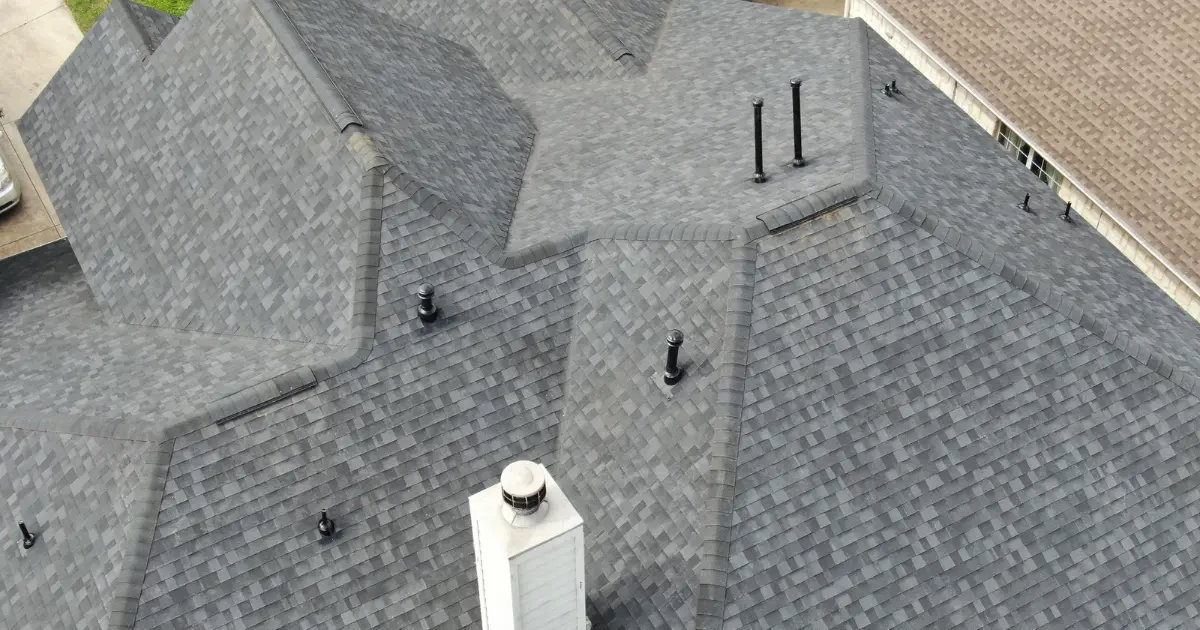
A roof isn't shingles. It's a system.
FOUNDATION™ is the standard tier of that system — not a stripped-down option, but the baseline we consider correct.
Most roofing proposals in San Antonio price a shingle. The shingle is the visible layer and the easiest thing to compare, so that is what gets sold. It is also the part of the roof least likely to be the reason the roof fails. Roofs fail at the details — flashing, fastening, ventilation, the transitions nobody photographs — and none of those appear on a one-line quote.
FOUNDATION™ solves that by being specified as an assembly. Every component is chosen to work with the others and to meet the manufacturer's requirements for a registered system warranty, so what you are buying is a documented installation rather than a pallet of material with labor attached.
Who it's for
Homeowners who want a properly engineered, properly warranted roof at the standard tier. You are not paying for a Class 4 or designer upgrade, and you are not being handed a bare shingle install by an uncertified crew either. If you want to see where the upgrades change the math, our roof cost breakdown and materials guide lay the options out in the open.
If your priorities point somewhere other than the standard tier, the other four Atrium systems are IMPACTSHIELD™ (Class 4 impact rating), STORMLOCK™ (Class 4 via rubberized asphalt), LEGACY™ (hail-focused engineering), and THERMALGUARD™ (energy performance).
What a FOUNDATION™ roof is made of
This is a representative configuration, not a fixed spec sheet. Component selection varies by project, and the exact list is written on your proposal before anything is ordered.
The primary roof covering is a UL 2218 Class 3 impact-rated architectural shingle. Representative options are Owens Corning Duration, GAF Timberline HDZ, and Malarkey Highlander AR — all three independently UL 2218 Class 3 rated per their manufacturers' own current data sheets. Which one we specify is a project decision, written on your proposal.
Same-manufacturer hip and ridge, not a cut-up field shingle. It is part of the component minimum a manufacturer requires before it will register an enhanced system warranty, and it is standard on every Atrium engineered system.
Balanced intake and exhaust sized to the attic, on every install. Under-ventilated attics age shingles from underneath, which is why ventilation sits inside the system rather than beside it as an add-on.
Underlayment, ice and water barrier, starter course, and flashings follow the same five-layer system described in “The system, not the shingle” on our roof replacement page. Same layers, same standards — FOUNDATION™ does not change them.
Price a FOUNDATION™ roof from your address
We measure your roof from aerial imagery and apply the FOUNDATION™ per-square rate. No email or phone number needed to see the number.
Pick a system and enter the property address. We return roof area in squares, including waste, and the installed cost range that area implies at our published rates. Nothing is gated behind a contact form.
The warranty only exists if it's registered
FOUNDATION™ is the standard tier, not a stripped-down one. The difference isn't the shingle — it's whether the system warranty is actually registered in your name by a certified installer.
one step below the top tier.
what a registered manufacturer warranty actually covers if something goes wrong.
an uncertified contractor can install the identical shingle and cannot register the warranty behind it.
- Manufacturer honors material defects for the system's stated term.
- Warranty is transferable.
- Backed by the manufacturer even if the installing contractor later closes.
- Same shingle, no manufacturer system warranty on file.
- Any defect claim depends entirely on the installer still being in business.
- Nothing is transferable.
What the Class 3 test actually is
To earn a Class 3 rating, a shingle has to survive UL 2218's steel ball test: a 1.75-inch solid steel ball dropped from 17 feet, twice on the same spot. The shingle passes if there's no cracking, tearing, or rupture on the underside.
Class 3 is one step below Class 4 — a 1.75-inch ball instead of a 2-inch one. It's a defined, tested tier, not a discount version of Class 4, and we won't tell you otherwise.
Every FOUNDATION™ install closes with the Power Package — including the manufacturer warranty registration confirmation and the supplier's material invoice, so you can prove the warranty exists.
No voicemail. Alex has a real conversation about the problem and gets it to our team.
What a registered, engineered roof could be worth to you
Enhanced attic ventilation is part of this system on every install. Under-ventilated attics age shingles from underneath, which is why ventilation sits inside the system rather than beside it as an add-on.
What this roof could be worth to you — in your numbers
Enter numbers from your own policy. This is an illustration, not a forecast.
Enter yours from your policy.
Use the wind/hail line, not the all-peril line. Many Texas policies list it as a percentage.
Ask your agent for this in writing. This page covers a Class 3 roof.
Ask about a cosmetic damage exclusion. Some carriers apply one to roofs that receive an impact-resistant credit. It generally means they will not pay for hail marks that change how the roof looks but not how it performs. Ask your agent, and get the answer in writing before you decide.
Each replacement paid through insurance costs you one deductible. Pick the scenario you want to see.
Enter your dwelling coverage and wind/hail deductible above.
Enter your agent's quote above to see this.
Pick how many replacements to model above.
Premium savings from the discount you entered, plus skipped deductibles from the scenario you picked.
Ask about a cosmetic damage exclusion. Some carriers apply one to roofs that receive an impact-resistant credit. It generally means they will not pay for hail marks that change how the roof looks but not how it performs. Ask your agent, and get the answer in writing before you decide.
What this leaves out
- Roof prices that rise over time.
- How filing claims can affect your premium.
- Anything your policy does not cover.
- Rules that are specific to your carrier.
Class 4 earns the highest impact-resistant credit under Texas Department of Insurance guidance. Whether your carrier credits Class 3 at all, and by how much, is its decision. Ask your agent.
Why roof age changes what insurance pays
A $10,000 roof on a house insured for $200,000 with a 2% ($4,000) deductible:
| Roof age | Roof's value | Minus deductible | Policy pays |
|---|---|---|---|
| 5 years | $8,500 | −$4,000 | $4,500 |
| 10 years | $7,000 | −$4,000 | $3,000 |
| 20 years | $4,000 | −$4,000 | $0 |
Source: Texas Department of Insurance example, as published by TDI.
On actual-cash-value policies, payments fall as the roof gets older. Some policies use a roof payment schedule instead, and that varies by carrier. A new roof starts at age zero.
How to claim a credit
- At closeout, you get the impact-resistant certification when it applies to your system. See the Power Package.
- Send it to your agent. Ask them to apply the credit in writing.
- Ask the cosmetic-exclusion question before you sign anything.
The manufacturer's warranty first. Ours underneath it.
A manufacturer-backed system warranty ranks above any contractor's own warranty for one reason: it survives the contractor. If a roofing company closes, changes hands, or simply stops answering the phone, a warranty backed by Owens Corning or GAF is still honored. A contractor's warranty is only worth as much as the contractor still being in business, and that is as true of ours as it is of anyone's.
Atrium holds Owens Corning Platinum Preferred, the top tier of the Owens Corning contractor network, which makes the enhanced Owens Corning system warranty available on our installs. We also hold GAF Certified Plus, which makes the GAF Silver Pledge available. These system warranties cover material and, at these tiers, workmanship, and they are registered with the manufacturer in your name.
Owens Corning Duration installs
Eligible for the Enhanced Owens Corning system warranty, available at Platinum Preferred standing.
GAF Timberline HDZ installs
Eligible for the GAF Silver Pledge, available because Atrium holds GAF Certified Plus. The tier-by-tier difference between System Plus and Silver Pledge is explained on our brands and certifications page.
Malarkey Highlander AR installs
Eligible for the Malarkey Certified Pro Warranty, available at Emerald Pro standing, available because Atrium holds the Malarkey Emerald Pro certification. It requires a complete Malarkey Secure Choice™ roof system — the shingles installed together with Malarkey's own accessories — rather than the shingle alone.
Atrium's workmanship layer
Atrium backs every roof replacement with a written 10-year workmanship warranty. It is non-prorated, so coverage in year ten is identical to year one, and it is fully transferable to the next owner. If a covered installation defect appears, we cover the labor and the materials to correct it.
The warranty covers the roof replacement we performed. It is our installation of your new roof system that carries the ten years.
It covers our installation, and that is all it covers. It is not insurance and it does nothing for hail, wind, or anything else an insurance claim would handle. The manufacturer's warranty on the shingles themselves is a separate document.
If you want the mechanics behind all of this — how the two documents differ, what quietly voids them, and how the certification tier decides which one can be registered — our roof warranty guide walks through it.
Whichever warranty applies to your system is registered in your name and delivered as part of the Power Package — up to five documents, depending on your roofing system; on a shingle system that includes the supplier's material invoice.
Why Class 3 is the baseline here
UL 2218 is the impact standard. Class 3 is its second-highest tier, assigned to shingles that withstand a 1.75-inch steel ball impact test — one step below Class 4. For Central Texas hail, that is a sensible baseline: San Antonio, New Braunfels, and the Hill Country take hail regularly, and most of it is not the size that separates a Class 3 roof from a Class 4 one.
Class 3 is not equivalent to Class 4, and we will not tell you it is. It is a defined, tested tier below it. Whether stepping up is worth it depends on your exposure, how long you plan to stay, and what your carrier does with impact-resistant documentation — we work through that comparison in Class 3 vs Class 4 shingles.
What matters just as much in this climate is the part of the system nobody rates: ventilation and flashing. Attic heat is the reason Central Texas roofs age faster than their labels suggest, which is why enhanced ventilation is standard on FOUNDATION™ rather than an upsell.
FOUNDATION™ FAQs
Let's spec the right system for your roof.
No pressure, no obligation. Calls answered 24/7 in English & español by Alex, our AI specialist · Get an engineer-led 53-point roof inspection, not a sales pitch.