
Standing seam metal roof installed on a two-story San Antonio home under blue Texas sky.
Roof problems

Something looks off with your roof. Let’s figure it out.

Most roof problems have simple explanations — and much cheaper fixes when caught early. Here’s how to diagnose the most common issues Central Texas homeowners see.

Six problems we see almost every week
Active or intermittent leaks
Water stains, drips, or musty smells — usually starting near penetrations, valleys, or flashings.
Missing or lifted shingles
Wind, age, or improper nailing. Small issue fast — big problem if ignored through storm season.
Granule loss & bald shingles
Granules in gutters mean the shingle mat is exposed to UV. Lifespan drops sharply once this starts.
Sagging roof deck
Structural — usually water damage, undersized decking, or long-term moisture from poor ventilation.
Pests in the attic
Squirrels, rats, and wasps enter through soffit gaps, ridge vents, or lifted flashings.
Ceiling stains, no visible leak
Often condensation from poor attic ventilation — not a roof leak at all.
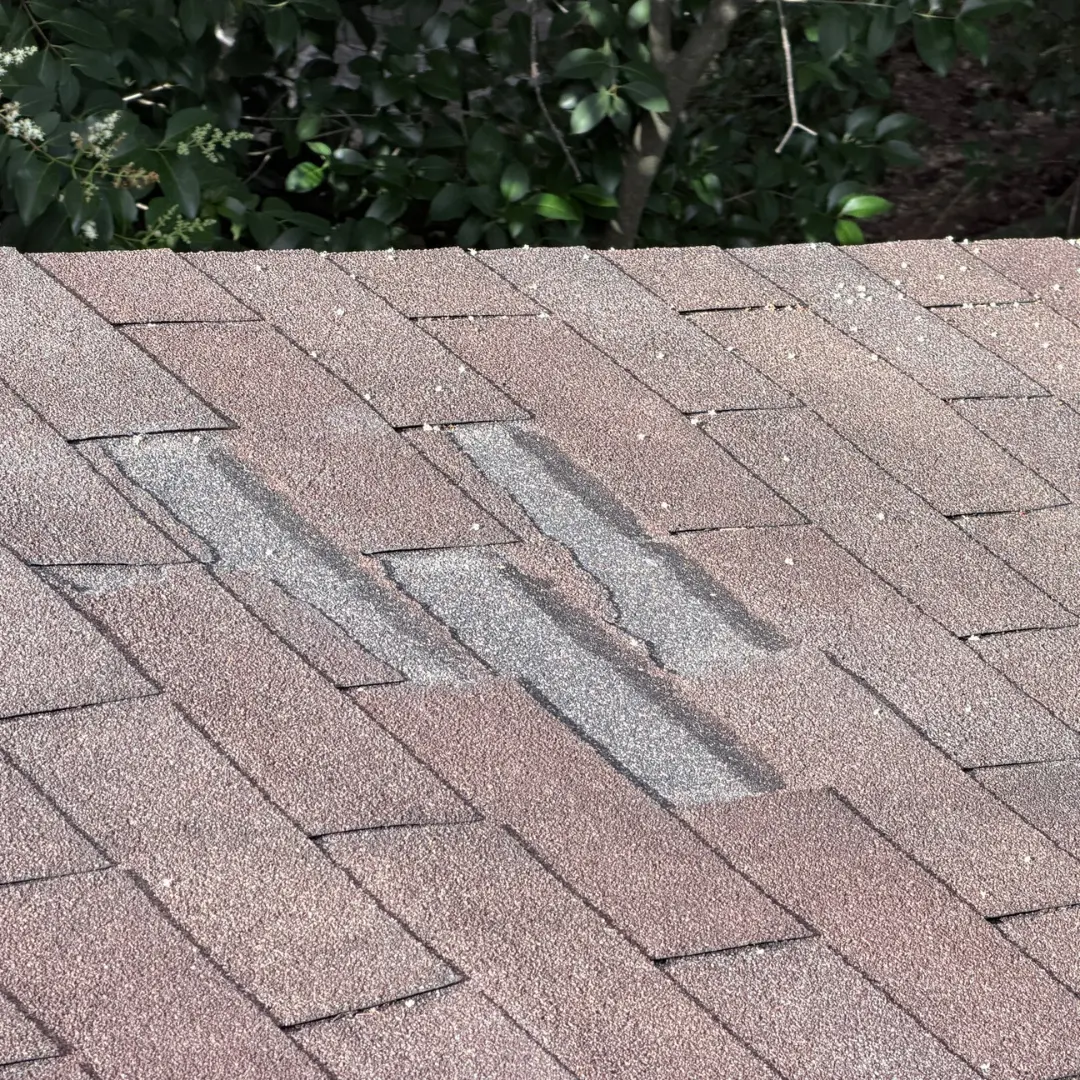
A roof slope with several shingle tabs torn away, leaving the lighter underlayment exposed.
Wind damage: shingle tabs gone, underlayment now doing a job it was never meant to do alone.
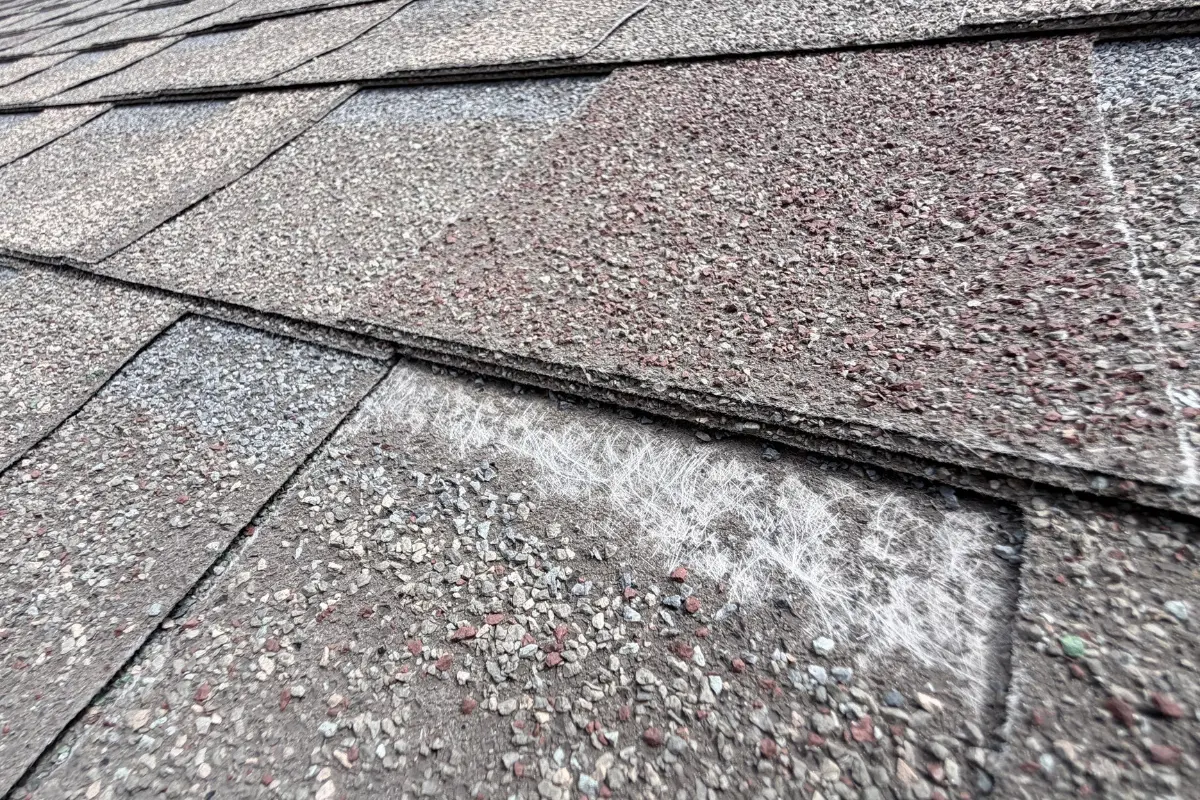
Close view of shingles where the granules have worn off and the white fiberglass mat shows through.
Granule loss far enough along that the fiberglass mat underneath is visible.
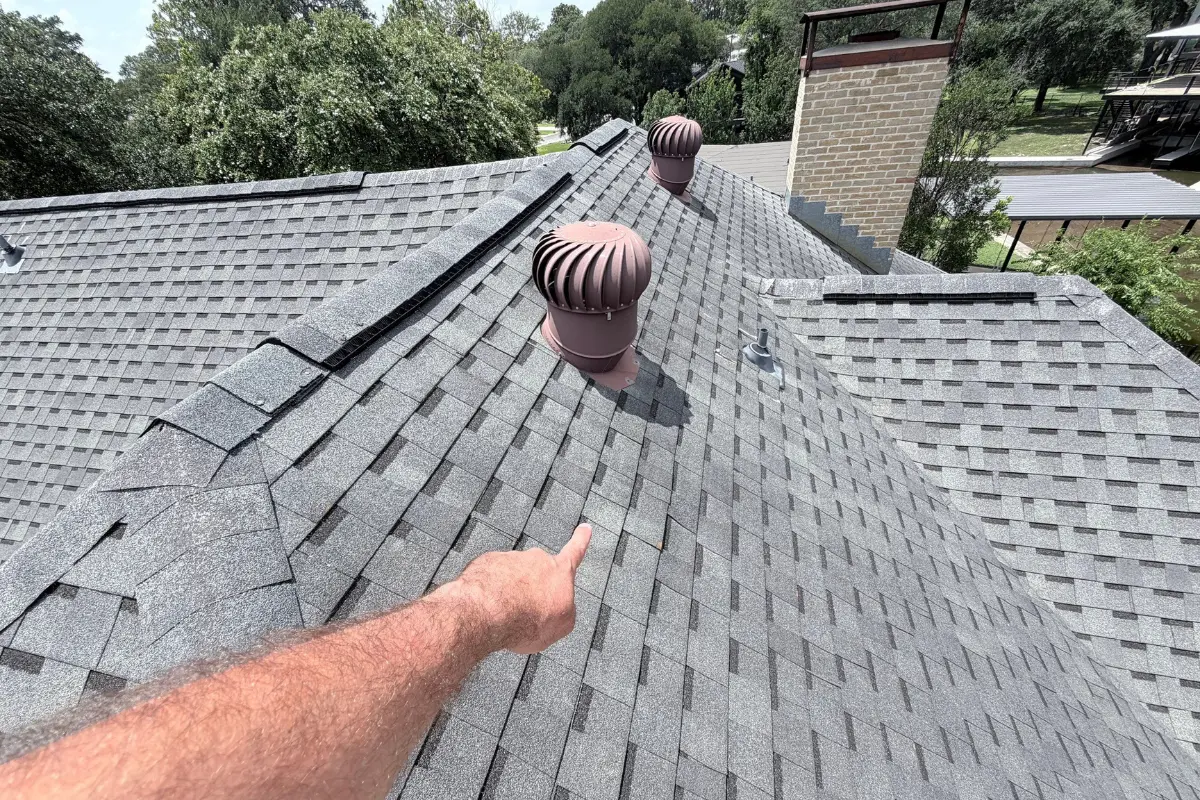
A hand pointing to a shallow dip in a shingle roof near a turbine vent.
A soft spot underfoot near a vent, which usually means moisture has been sitting in the decking.
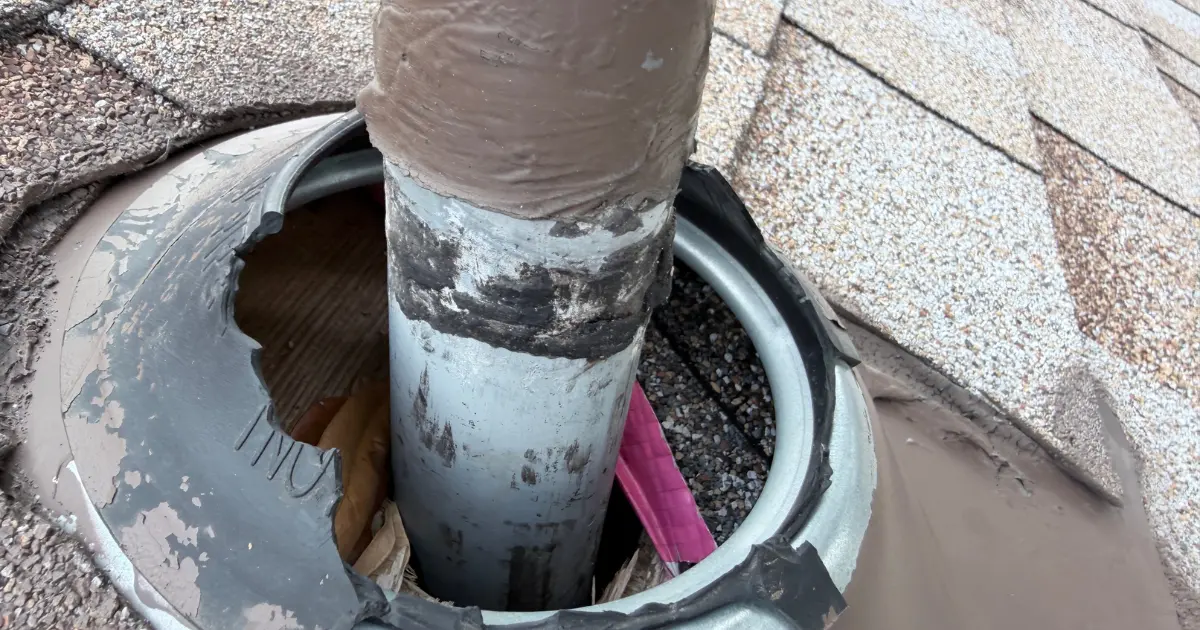
A rubber pipe boot with a hole gnawed through the side by an animal.
Pest entry at a plumbing vent, on a roof only two years old.
Get a Free Roof Diagnosis
Decision framework

Repair, monitor, or replace?

A simple test we use on every inspection.

1. How old is the roof?

Under 12 years: usually repair. 12–20 years: it depends on the failure mode. 20+ years: replacement almost always wins on cost per year of service life.

2. Is the damage isolated or widespread?

A single leak from a pipe jack is a repair. Multiple leaks, valley failures, or widespread granule loss means the whole system is at end-of-life.

3. Has the decking been compromised?

Soft or sagging decking under the shingles means water has been in the system for a while. That’s no longer a repair.

Common questions

Leaks usually appear during or right after rain and worsen with heavy weather. Condensation stains appear in cold snaps or humid mornings, spread evenly, and show up on the north side of the attic. Check your attic decking for frost or dampness on cool mornings — that points to ventilation, not roofing.

Granule loss in gutters, curling shingle edges, exposed nail heads, cracked pipe boots, and rusted flashings. Any two of those together mean you should schedule an inspection this year — not next.

Urgent. A single wet season can turn a $400 flashing repair into $6,000+ of decking, insulation, and drywall damage. Water also feeds mold within 24–48 hours.

You can inspect from the ground with binoculars and from inside the attic with a flashlight. Never walk your own roof — Central Texas shingles get slick with heat and morning dew, and homeowner falls are the #1 roofing injury.
Not sure what you’re looking at?

Send us a photo. We’ll tell you honestly whether it needs attention now, later, or never.