The Complete Roofing Guide for Selma
Selma is the only city we work in whose limits straddle three counties. Bexar, Comal, and Guadalupe all cross this small city along I-35, and it changes who permits your roof, whose parcel data your adjuster pulls, and — because the soil transitions with it — what is likely to fail on your house.
Roofing in Selma, and why it isn't like anywhere else
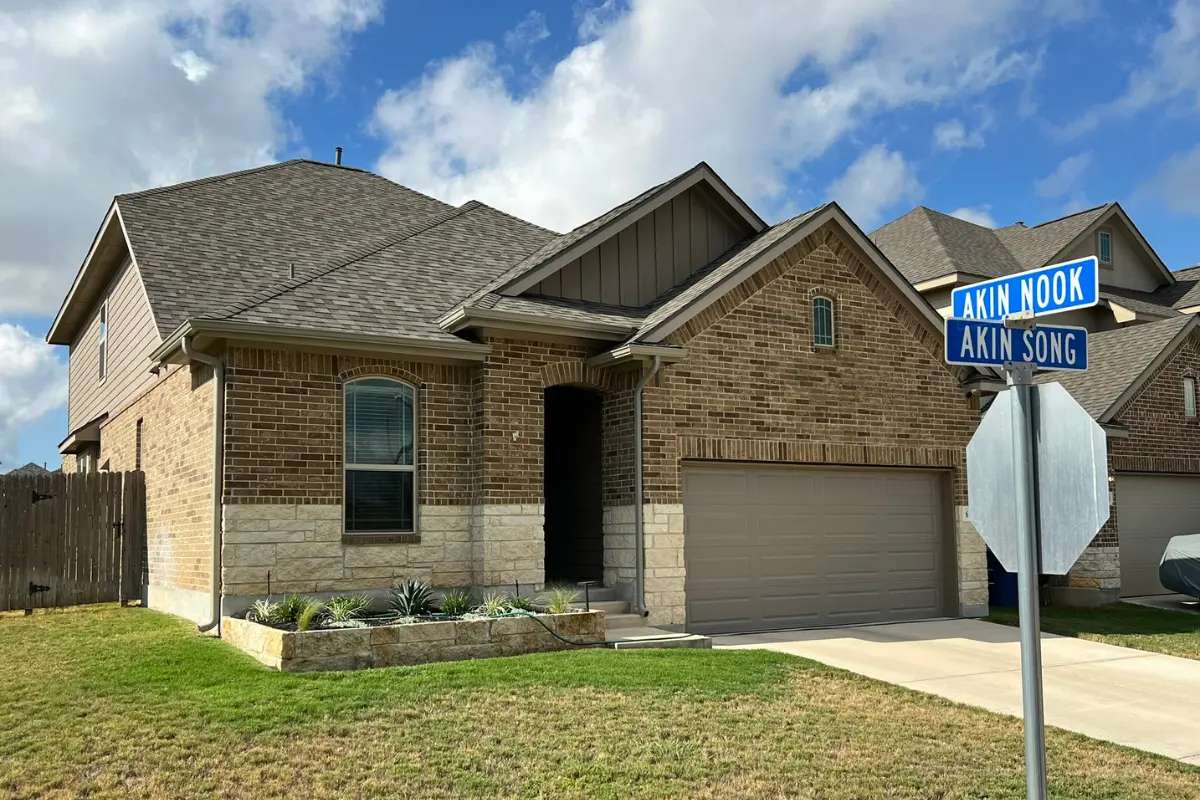
Selma is a small city wedged between Live Oak, Schertz, Universal City, and Cibolo, sitting on I-35 at the Loop 1604 interchange near Retama Park and The Forum. Its city limits cross the Bexar, Comal, and Guadalupe County lines. Most homeowners here could not tell you which county their house falls in, and until something needs a permit or a claim, they have no reason to. Roofing is one of the moments it starts to matter.
The housing stock splits cleanly. There is an older original core along FM 1518 and Evans Road, and then a large volume of 1990s through 2010s production subdivisions built out during the corridor's growth years. Those production phases went up in same-age cohorts, which is why Selma reroofs happen street by street rather than house by house. Layer on a genuine I-35 hail corridor, flat open terrain with immature canopy in the newer tracts, and blackland clay across the eastern and southern sides, and you have a city where the roof conversation is highly predictable once you know the address — and misleading if you only know the city.
How Selma weather actually loads your roof
Open terrain, corridor hail, full-day sun, and soil that changes as you move across town. These are the loads that actually shorten a Selma roof.
What we see most often on Selma roofs
Why roofs actually fail, from a systems point of view
Atrium Roofing is engineer-led. Here's how we think about your roof as a system, not a stack of shingles.
In most cities we can generalize. In Selma we cannot, and the reason is that the city limits cross three county lines. Bexar, Comal, and Guadalupe all take in part of Selma, and that one fact propagates into almost every practical part of a roofing project. So the question we get asked most — "what does a roof cost in Selma?" — is the wrong question here. The right question is what does a roof cost at this address.
Permitting authority depends on which county you are in
Which jurisdiction handles the permit and the inspection for your replacement depends on where your parcel actually falls, and homeowners very frequently do not know. We confirm the applicable authority per address before scheduling rather than assuming a single process covers the whole city. This is also why two neighbors can compare notes and find their permits were handled differently — nobody did anything wrong, the parcels simply sit on opposite sides of a line neither of them can see.
Your county determines the records an adjuster pulls
Appraisal district records, property tax data, and the parcel information a carrier or adjuster looks up all come from the county, not the city. When a claim involves verifying square footage, ownership, or prior permitted work, the record lives in Bexar, Comal, or Guadalupe depending on the address. It is usually a non-issue and occasionally it is the reason a file stalls, so we note the county on our documentation from the start.
The soil transitions across the city, so failure risk is address-specific
Blackland clay dominates the eastern and southern sides of Selma and grades shallower toward the northwest. Two homes a mile apart can have meaningfully different foundation-movement behavior. On the clay side we expect chimney and wall-to-roof flashing separation and we rebuild those details rather than resealing them, because sealant cannot absorb a structure that moves seasonally. On the shallower northwest side, the same leak is far more likely to be workmanship or simple age — a different diagnosis and a different repair. Any contractor quoting Selma from a citywide template is guessing at half the houses.
Class 4 is the default here, not the upsell
Selma sits in a real I-35 hail corridor with the same storm tracks that hit Schertz and Universal City. On a production home with an insurable roof, UL 2218 Class 4 impact-rated shingle is our default specification. It survives events that destroy standard product, and most carriers credit the wind and hail portion of the premium. Class 4 impact-resistant shingles can qualify for a premium discount in Texas. The amount is set by your insurance carrier, so ask your agent what yours would be.
Whole streets age together, and that is an opportunity
Because production phases were roofed in same-age cohorts, when your neighbors start replacing, your roof is very likely on the same clock. That is worth knowing before a storm forces the decision on someone else's timeline. It also means we can often schedule adjacent homes efficiently, which we pass through rather than pocket.
Three paths, and how to know which one fits
What roofing actually costs in Selma
Selma prices in the mid range for our service area. The stock is production-weighted with straightforward rooflines and good access, which keeps labor efficient. Ranges are 2026 figures for typical single-family homes. These are ranges based on typical local jobs, and the actual number depends on your roof.
- Which county your address falls in, which determines permit handling and adds or removes steps from the schedule.
- Soil at the address — clay-side homes more often need flashing rebuilt rather than resealed.
- Roof pitch, roofline complexity, and the number of penetrations.
- Class 4 impact-rated versus standard architectural shingle.
- Decking condition, priced per sheet in the contract.
- Ventilation correction where builder intake or exhaust is inadequate.
- Gutter footage, downspout count, and discharge routing away from the foundation.
Paying for a roof without draining savings
On Selma production stock, we put the standard and Class 4 paths side by side so the decision is made on arithmetic. Financing terms run 60 to 180 months. Financing is subject to credit approval. The terms shown here are examples, and your actual rate, term, and payment depend on the lender's decision.
On an insurance-funded job, the deductible is usually the only real out-of-pocket, and financing it is common. Atrium offers 0% APR financing for up to 12 months, subject to credit approval.
Roof systems that hold up in Selma
These aren't the cheapest options. They're the ones that actually make it to their warranty on Central Texas roofs.
Atrium's 5 Engineered Systems
Available on any Selma roof. Full assemblies, not just shingles. Your install may be eligible for a registered manufacturer system warranty.
Roof characteristics by Selma neighborhood
Housing stock, roof age, and the failure modes we see most often, block by block.
Around Selma
A little context helps calibrate what a roof in this specific community faces.
Roofing services we deliver in Selma, TX
Production subdivisions reaching end of life as a cohort, an older core along FM 1518, and a soil line running through the middle of the city. We scope them separately.
Roof replacement is the bulk of our Selma work, and on production stock our default specification is Class 4 impact-rated asphalt given the I-35 hail corridor — full tearoff, high-temperature synthetic underlayment, ice-and-water membrane in valleys and at wall lines, all new flashings rather than reused ones, balanced intake and exhaust ventilation, and a manufacturer system warranty registered in the homeowner's name. We confirm the permitting authority for your specific address first, because Selma's three county lines mean the process is not identical across the city.
Roof repair in Selma divides along the soil line. On the eastern and southern clay side, our repair calls are dominated by chimney and wall-to-roof flashing that has separated under seasonal movement, and the correct fix is rebuilding the detail rather than resealing a joint that will open again next summer. Toward the shallower northwest, the same symptom is far more likely to be workmanship or simple age. We diagnose by address, not by city.
Storm and hail response is a standing service line here because Selma, Schertz, and Universal City sit under the same storm tracks. We document functional versus cosmetic damage with photographs and measurements before anyone talks about a claim, and we will tell you when there is nothing worth filing. Read the hail damage guide for exactly how that distinction is made.
Pre-listing and PCS roof certification matters in Selma because Randolph AFB proximity means frequent sales on short timelines. We provide a written condition report with photographs, remaining service life, and itemized defects in a form a buyer's agent, a lender, and a VA appraiser will accept — including the cases where we tell you not to spend money you will not get back at closing.
Gutter installation and gutter repair carries real weight on the clay side, where discharge at the foundation is what feeds the movement that cracks your flashing in the first place. We install 6-inch seamless aluminum with a correct downspout count rather than a minimum one, and route the discharge well away from the slab. Our seamless gutter installation and repair guide covers sizing, downspout spacing, and discharge in detail.
Ventilation and attic performance work is a frequent correction on Selma production roofs, where builder intake is commonly inadequate and adding exhaust alone accomplishes little. See our attic ventilation guide for the physics behind balanced intake and exhaust.
How I-35 corridor conditions actually damage Selma roofs
Corridor hail, open-terrain wind, full-day sun, and a clay line that runs through the middle of the city.
Hail. Selma sits in a genuine I-35 hail corridor with recurring 1"–2" events and larger stones on record, taking the same storm tracks as Schertz and Universal City. Functional damage is a fractured mat with granule loss down to the asphalt, plus denting in soft metals. Class 4 impact-rated shingle survives events that destroy standard product, which is why it is our default specification here rather than an upgrade we pitch.
Blackland clay on the east and south. Clay swells when wet and shrinks when dry, moving the structure through the season. Rigid flashing at chimneys and wall-to-roof transitions cannot absorb that, so the joints open. This is the defining repair pattern on that side of the city, and it grades away toward the northwest — which is why two Selma homes a mile apart genuinely behave differently.
Straight-line wind on open ground. Flat terrain and immature canopy in the newer tracts give thunderstorm outflow an unobstructed run at the roof. Ridge caps and rake edges lift at the corners first, and once water gets under the field from the top the failure propagates downward. Hand-sealed caps, starter strip at every rake and eave, and correct fastener patterns are baseline here.
Full-day ultraviolet. Thin canopy means south and west slopes take an unshaded load all day, and the practical result is that one side of a roof reaches end of life several years before the other. We evaluate slopes independently rather than assigning a single age to the whole roof.
Attic heat under unshaded production roofs. Builder ventilation was specified to code minimum and frequently degraded by later attic work. Under Texas sun that drives deck temperatures high enough to age the shingle from beneath, shortening the life of an assembly that looks fine from the street. Intake is almost always the deficient half.
Selma, TX — where we work
We serve homeowners throughout Selma — Retama Springs, Stonebridge, Forest Creek, Olympia Hills, Ridgemont, the original core along FM 1518, and the Retama Park and Forum corridor — across all three counties the city limits cross.
What homeowners actually say
Published, verifiable reviews from third-party platforms, not marketing copy.
Selma homeowner questions
Related resources
Let's take a look at your roof in Selma.
No pressure, no obligation. Calls answered 24/7 in English & español by Alex, our AI specialist · Get an engineer-led 53-point roof inspection, not a sales pitch.