
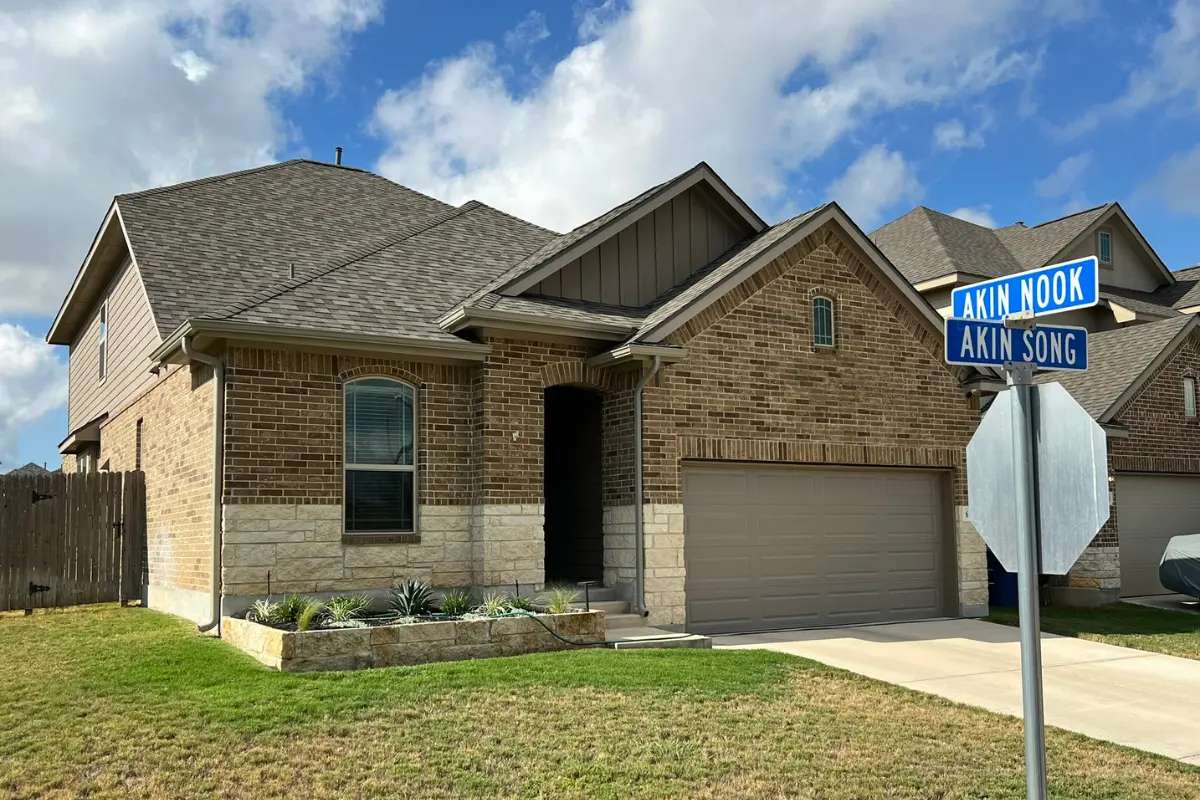
Atrium Roofing crew installing an engineer-led roofing system on a San Antonio residence.
Far West San Antonio · Bexar County · 78253 / 78254 · Roofing knowledge center

The Complete Roofing Guide for Alamo Ranch

Alamo Ranch roofs age unevenly. West and southwest slopes take punishing afternoon sun on open, high terrain, and a huge share of the area's original builder shingles are reaching end of life at the same time.
Local introduction

Roofing in Alamo Ranch, and why it isn't like anywhere else

Alamo Ranch is not an incorporated city. It is a large master-planned community and the surrounding area on the far West Side of San Antonio, in Bexar County, covering ZIPs 78253 and 78254 roughly between Loop 1604, Culebra Road (FM 471), Highway 151, and Talley Road. That matters practically: most reroof permits here go through the City of San Antonio, some outlying sections fall under Bexar County jurisdiction, and nearly every neighborhood also has an active homeowners association with its own architectural review. There is no "City of Alamo Ranch" permit office to call.

The geology here is the opposite of the east side. Far West San Antonio sits on shallow caliche and limestone rather than the expansive blackland clay under Cibolo and Schertz, so seasonal foundation cycling — and the recurring flashing failures it causes — is a much smaller share of the repair mix. What dominates instead is exposure: relentless afternoon sun, open straight-line wind, and hail. This guide is about those loads, and about the fact that most homes here were built between roughly 2005 and 2020, which means an entire community's worth of original roofs is wearing out on the same schedule.

Climate & weather

How Alamo Ranch weather actually loads your roof

High, flat, open ground with immature landscaping. Nothing shades the roof and nothing slows the wind.

Severe west and southwest sun
Afternoon sun on unshaded slopes drives surface temperatures well past 150°F. West-facing planes age visibly faster than north-facing ones on the same house.
Hail across the far West Side
Storm cells moving off the Hill Country escarpment regularly drop 1"–2" stones across 78253 and 78254.
Unobstructed straight-line wind
Flat terrain and young trees mean thunderstorm outflow hits ridge caps and rake edges at full speed.
Shallow caliche and limestone
Far less soil movement than east-side clay markets. Foundation-driven flashing failures are comparatively uncommon here.
Edwards Aquifer Recharge Zone
Much of the far West Side sits over the recharge zone, which carries impervious-cover and stormwater rules that vary by lot. Verify before altering drainage.
Intense, short-duration rainfall
Large volumes arrive fast. Builder-standard gutters frequently cannot carry the peak on a two-story roof.
Common problems

What we see most often on Alamo Ranch roofs

West-slope shingle failure years ahead of the rest
Granule loss, curling, and brittle mat on the west and southwest planes while the north slope still looks serviceable. The most common finding on any Alamo Ranch inspection.
End-of-life original builder shingles
The 2005–2012 phases are 15–20 years in. Builder-grade 3-tab and entry architectural systems are failing across whole streets at once.
Wind-lifted ridge caps and rake edges
Factory-sealed caps on exposed lots release at the corners, letting water in from the top of the slope down.
Hail bruising that is easy to miss
Fractured mat with no visible hole. Soft metals — gutters, vent caps, flashing — usually show the evidence first.
Undersized gutters on two-story elevations
Steep two-story runs concentrate a lot of water into short lengths of 5-inch trough with too few downspouts. Overflow, fascia rot, and washed-out beds follow.
Ventilation shortfalls under a high heat load
Blocked or insufficient soffit intake with a full ridge vent produces a hot, starved attic that cooks shingles from below.
Diagnosing something specific? Our roof problem guide walks through leaks, granule loss, sagging, and ventilation failures step by step.
Engineer's perspective

Why roofs actually fail — from a systems point of view

Atrium Roofing is engineer-led. Here's how we think about your roof as a system, not a stack of shingles.

The most important engineering fact about an Alamo Ranch roof is that it does not age as one surface. On open lots with no canopy, the west and southwest slopes absorb hours of direct afternoon sun at the hottest part of the day, every day, for the life of the roof. The north and east slopes on the same house see a fraction of that load. The result is measurable differential aging: it is routine here to find a west plane with heavy granule loss, failed sealant strips, and curling while the north plane still has years of service left.

This has three practical consequences homeowners should know about.

An inspection that skips the west slope is not an inspection

Homeowners are told "your roof looks fine" after someone walks the shaded side or looks from the driveway. Ask for photos of every slope, labeled by orientation. If a report does not separate west and southwest from the rest, it does not tell you the thing that matters most in this neighborhood.

Partial-slope replacement is sometimes legitimate and often a false economy

Replacing only the failed west plane can be the right call when the rest of the roof is genuinely young — after isolated wind damage on a six-year-old roof, for example. On a sixteen-year-old roof it usually is not, because the remaining slopes follow within a few years and you pay mobilization, tearoff, and access twice. Color matching between an aged plane and new material is also imperfect. We will quote both and show the math rather than push the larger job by default.

Insurance scope fights are usually about slope count

After hail, the common dispute is not whether damage exists but whether the carrier pays for one slope or the whole roof. Slope-by-slope documentation with dated photos, test squares, and damage counts per plane is what settles it. We do that documentation as standard practice and meet the adjuster on the roof.

HOA architectural review is a real step here

Nearly every neighborhood in Alamo Ranch has an active HOA, and most require architectural approval for a reroof, including shingle color and profile. Submit before scheduling. Approval commonly takes one to four weeks, and installing an unapproved color is an expensive mistake to unwind.

Class 4 is the right default in this exposure

Given far West Side hail frequency and the fact that most homes here have moderately simple production rooflines, Class 4 impact-rated asphalt is our standard recommendation. The premium is a modest share of the job, most carriers discount the wind-and-hail portion of the policy for a UL 2218 Class 4 roof, and the mat resists fracture from the stone sizes this area actually sees.

Repair, replace, or claim

Three paths, and how to know which one fits

Roof Repair
When damage is isolated — a failed pipe boot, a wind-lifted ridge cap, a valley leak on an otherwise healthy Alamo Ranch roof — a targeted repair is almost always the right call. Expect $400–$2,500 for most residential repairs, with a written scope so you know what's being touched and what's being left alone.
See Alamo Ranch Roof Repair Options
Roof Replacement
Once a roof is past 18–20 years, has multiple leak points, or shows widespread granule loss and decking softness, a full system replacement wins on cost per year of service. See our full replacement guide.
View the Full Alamo Ranch Roof Replacement Guide
Storm Damage
Hail, straight-line winds, and tree impact from Central Texas storms may qualify for an insurance-funded replacement. We inspect first, document with photos, and only recommend a claim when damage is genuinely functional — never cosmetic.
Report Alamo Ranch Roof Storm Damage
Ballpark costs

What roofing actually costs in Alamo Ranch

Alamo Ranch homes skew slightly larger than east-side production stock, with more two-story elevations and more cut-up rooflines, so pricing runs modestly above markets like Cibolo and well below Hill Country custom work. 2026 figures for typical single-family homes. These are ranges based on typical local jobs, and the actual number depends on your roof.

Small repair
$450 – $1,200
Pipe boot, ridge cap section, minor flashing or vent repair.
Mid repair
$1,200 – $3,600
Single-slope wind repair, valley re-detail, chimney or wall flashing rebuild.
Architectural reroof (2,600 sq ft roof footprint)
$14,900 – $18,900
GAF Timberline HDZ or Malarkey Vista, full tearoff, new flashings, synthetic underlayment.
Class 4 impact reroof
$17,300 – $22,000
Malarkey Legacy or GAF Armorshield II. Our default recommendation in 78253 and 78254.
Standing seam metal
$25,200 – $40,900
24-gauge Galvalume. Chosen occasionally by long-horizon owners, subject to HOA approval.
6-inch seamless gutters (full house)
$2,000 – $4,200
Aluminum with sized downspouts. Repairs, re-pitching, and section replacement typically $250 – $900.
How much would a new roof cost in Alamo Ranch?
Get an instant estimate
What moves the number
  • Roof size, pitch, and one-story versus two-story access.
  • Number of slopes, valleys, and penetrations.
  • Decking replacement discovered after tearoff.
  • Class 3 versus Class 4 shingle selection.
  • HOA-approved color and profile availability.
  • Gutter linear footage and downspout count.
For a full breakdown by material, layer, and roof complexity, see the Central Texas roof cost guide. Compare shingles vs. metal vs. tile side by side in our materials comparison.
Financing

Paying for a roof without draining savings

Most Alamo Ranch replacements are financed over 60–120 months or bridged at 0% APR while an insurance claim funds. Because so many homes in the area were bought within the last fifteen years, homeowners here frequently have equity-based options as well, though a straightforward installment plan is usually simpler for a project of this size.

Bexar County wind and hail deductibles commonly run 1–2% of dwelling coverage, so a $400,000 dwelling limit means $4,000–$8,000 out of pocket on an approved claim. That deductible, not the full project price, is typically the amount that needs financing.

Full terms and monthly payment calculators live on our financing page. If a storm was involved, our insurance guide explains how deductibles and depreciation actually work.
Recommended systems

Roof systems that hold up in Alamo Ranch

These aren't the cheapest options — they're the ones that actually make it to their warranty on Central Texas roofs.

Class 4 impact-rated asphalt (Malarkey Legacy, GAF Armorshield II)
The default here. Far West Side hail frequency plus an insurance discount that typically returns the upgrade cost within five to eight years.
Balanced ridge and soffit ventilation
The heat load on unshaded Alamo Ranch roofs makes intake capacity the difference between a shingle reaching its rated life and falling years short.
Reflective or lighter shingle colors where the HOA allows
On west and southwest slopes, surface temperature reduction directly slows sealant fatigue and granule loss.
Upgraded wind detailing
Hand-sealed ridge caps, starter strips along every rake and eave, and a correct six-nail pattern on open, wind-exposed lots.
6-inch seamless gutters with sized downspouts
Two-story elevations concentrate large volumes into short runs. Correct sizing protects fascia, landscaping, and drainage away from the slab.
Neighborhoods

Roof characteristics by Alamo Ranch neighborhood

Housing stock, roof age, and the failure modes we see most often, block by block.

2005–2015
Alamo Ranch proper
The core of the community and the source of most of our replacement work. Original builder shingles here are 15–20 years old and failing in volume, west slopes first.
2007–2018
Stillwater Ranch
Mixed phases along Talley Road. Earlier sections are at or near replacement; later ones are in the inspection-and-ventilation stage.
2010s
Wildhorse
Newer production stock with generally sound roofs. Useful work here is hail documentation after storms and verifying soffit intake was not blocked by insulation.
2015–2020s
Bricewood
Among the newest sections. Roofs are young; the practical issues are gutter sizing and post-storm inspection rather than replacement.
1980s–1990s
Silver Oaks / Braun Station
The genuine contrast in this area — an older pocket surrounded by new construction. Mature trees, plank or older sheathing in places, second- and third-generation roofs, and repair problems that look nothing like the newer tracts.
2010s
Talise de Culebra
Newer homes along Culebra Road with simple rooflines. Wind exposure along the corridor is high; ridge cap and rake edge detailing matters.
2010s
The Village at Alamo Ranch
Higher-density product with shared drainage patterns. Gutter and downspout discharge planning is more constrained than on larger lots.
Local context

Around Alamo Ranch

A little context helps calibrate what a roof in this specific community faces.

Alamo Ranch is best understood by its boundaries rather than a downtown. Loop 1604 forms the eastern edge, Culebra Road (FM 471) runs east–west through the middle, Highway 151 carries the southern side toward Sea World and on to Lackland Air Force Base, and Talley Road defines much of the western reach. Government Canyon State Natural Area sits just to the north and is a reminder of the terrain — high, rocky, and thin-soiled. The Alamo Ranch retail corridor along 1604 is the commercial anchor, and Northside ISD schools serve nearly the entire area. Helotes is immediately north, far West San Antonio proper is east, and the Hill Country begins a short drive up 1604. Everything here sits in Bexar County under ZIPs 78253 and 78254.
Alamo Ranch services

Roofing services we deliver in Alamo Ranch, TX

Production subdivisions off 1604 and Culebra, higher-density product in the Village, and the older Braun Station pocket each need a different scope. We price them as different jobs, because they are.

Roof replacement and roof installation in Alamo Ranch is the largest part of our work in 78253 and 78254, driven by the 2005–2015 phases now reaching the end of their original builder shingle life. On homes in Alamo Ranch proper, Stillwater Ranch, and Talise de Culebra, we most often install a Class 4 impact-rated system — Malarkey Legacy or GAF Armorshield II — with full tearoff, synthetic underlayment, ice-and-water membrane in valleys and at wall lines, all new flashings, balanced ridge and soffit ventilation, and a manufacturer system warranty registered in the homeowner's name. We submit the HOA architectural request and pull the City of San Antonio permit as part of the job rather than leaving either to the homeowner.

Roof repair, including single-slope work, covers wind-lifted ridge caps and rake edges, cracked pipe boots, valley re-detailing, and isolated hail damage. Because west and southwest slopes here fail years ahead of the rest, we quote partial-slope work honestly: it is the right answer on a young roof with localized damage, and usually a false economy on a roof past about twelve years. We show the cost-per-remaining-year comparison rather than defaulting to the larger job.

Roof inspection is a standalone service here, and it matters more than in most markets because of the resale volume. Every inspection includes photographs of each slope labeled by orientation, test squares documenting impact counts per plane, an attic walk for decking condition and moisture, and verification that soffit intake was not blocked by blown insulation. If you are buying in Alamo Ranch, get one before the option period closes.

Storm damage roof repair and insurance claims follow the same pattern after every far West Side hail event. We inspect at no cost, document functional damage slope by slope with dated photos, and tell you whether a claim is worth filing. When it is, we meet the adjuster on the roof, because the dispute here is almost never whether damage exists — it is whether the carrier pays for one slope or the whole roof. Read the hail damage guide for how functional and cosmetic damage differ.

Emergency roof repair is available after storms, and the goal in the first 48 hours is narrow: stop water from entering. That means tarping exposed decking, sealing open flashings and lifted ridge lines, and clearing blocked drainage — not committing to a permanent scope while the roof is still wet. We photograph all mitigation work, because carriers reimburse reasonable emergency measures and will ask for the documentation.

Gutter installation and gutter repair in Alamo Ranch is a full service line, not an add-on, and it draws more homeowner questions here than almost anywhere else we work. The reason is the housing stock: two-story elevations with tall, steep planes concentrate a very large volume of water into short lengths of trough, and builder-standard 5-inch gutters with the minimum number of downspouts cannot carry peak flow during a Central Texas downpour. The result is overflow at exactly the moment it does the most damage — water sheeting behind the gutter into the fascia, washed-out landscaping beds, and saturated ground against the foundation and walkways. Our standard specification is 6-inch seamless aluminum with 3x4 downspouts, spaced more generously than the original builder count, and discharge extensions that carry water clear of the structure. On the repair side, most of what we do is re-pitching sagging runs, resealing failed seams and miters, replacing hail-dented sections, reattaching pulled hangers, and adding downspouts to runs that were undersized from day one. Our seamless gutter installation and repair guide explains how sizing and downspout count are decided. Where a lot sits over the Edwards Aquifer Recharge Zone, we verify drainage and impervious-cover considerations for that specific address before changing where water discharges rather than assuming the standard approach applies.

Ventilation and attic performance work is disproportionately valuable on these unshaded lots. Balanced intake at the soffit paired with continuous ridge exhaust lowers deck temperature, slows shingle aging on the sun-loaded slopes, and reduces cooling load through the summer. See our attic ventilation guide for the physics behind why intake capacity, not exhaust, is usually the limiting factor.

Local conditions

How far West Side exposure actually damages roofs

Alamo Ranch sits high, flat, and open on thin soil over caliche and limestone. The loads that matter here are sun, wind, and hail — not the soil movement that drives failures on the east side of the metro.

Differential sun load. This is the defining condition. With immature landscaping and no natural canopy, west and southwest slopes take direct afternoon sun during the hottest hours of every day. Surface temperatures on those planes routinely exceed 150°F while a north plane on the same house runs substantially cooler. Sealant strips fatigue, the asphalt binder oxidizes and hardens, and granules shed. The visible result is a roof that appears to have two different ages depending on which side of the house you are standing on — because functionally, it does.

Hail. Cells moving off the Balcones Escarpment carry hail across the far West Side regularly, with 1"–2" stones a recurring rather than rare occurrence. Class 3 shingles typically survive with cosmetic marking; Class 4 impact-rated systems resist mat fracture at these sizes and earn a carrier discount. Soft metals dent first and provide the clearest evidence an adjuster will accept.

Straight-line wind with no obstruction. Flat terrain and young trees mean thunderstorm outflow reaches the roof at full speed. Ridge caps and rake edges release at the corners first, and once a cap lifts, water enters from the top of the slope and runs beneath the field shingles. Hand-sealed ridge caps, starter strips along every rake and eave, and a verified six-nail pattern are baseline on every reroof we install here.

Shallow caliche and limestone, not clay. Worth stating explicitly because it changes the repair mix. Homes on the east side of the metro — Cibolo, Schertz, Seguin — sit on expansive blackland clay that swells and shrinks seasonally, racking the frame and repeatedly cracking chimney and wall flashings. Far West San Antonio's thin soil over rock moves far less. Flashing failures still happen here, but they are usually installation or age related rather than a symptom of the ground moving underneath the house.

Rainfall intensity and the recharge zone. Central Texas storms deliver large volumes in short bursts, which is what overwhelms undersized gutters on two-story elevations. Much of this area also sits over the Edwards Aquifer Recharge Zone, where impervious-cover and stormwater regulation is stricter than elsewhere in the metro. Routine roofing and gutter work is generally unaffected, but any change to site drainage or added impervious area should be verified lot by lot rather than assumed.

Service area

Alamo Ranch, TX — where we work

We serve homeowners across ZIPs 78253 and 78254 on the far West Side — from Alamo Ranch proper and Stillwater Ranch off Talley Road, through Wildhorse, Bricewood, Talise de Culebra, and The Village at Alamo Ranch, to the older Silver Oaks and Braun Station pocket.

Verified reviews

What homeowners actually say

Published, verifiable reviews from third-party platforms — not marketing copy.

4.9★ · 290+ Google Reviews · 60+ Yelp Reviews · 29 Verified GuildQuality Reviews · A+ Rated by BBB · 100% Would Recommend
"Atrium Roofing was very professional. I did my own research, and that's why I chose them. I talked to the owner, Jose, and he was very professional. I liked how they did business. They are a good, respectable business."
Ray J.
San Antonio, TX
Verified · GuildQuality
"Efficient estimate, provided support and guidance in understanding the roofing and insurance process."
Susan L.
San Antonio, TX
Verified · GuildQuality
"Great experience, from start to finish. Owner did 3 onsite visits. The General Manager made an onsite visit. The owner worked with my insurance adjuster directly. Always available to answer questions. He was very knowledgeable and patient with ALL of my many questions. The roofers even showed up a little early. Kept the area clean and, poof, they were done. Excellent. Would highly recommend."
Cheryl D.
San Antonio, TX
Verified · GuildQuality
Frequently asked

Alamo Ranch homeowner questions

Alamo Ranch is not an incorporated city. It is a master-planned community and surrounding area within Bexar County on the far West Side of San Antonio, in ZIPs 78253 and 78254. Most addresses are inside San Antonio city limits, so the reroof permit goes through the City of San Antonio. Some outlying sections are in unincorporated Bexar County and follow county requirements. Your contractor should confirm which applies to your specific address and pull the permit in their name.

Check for a permanent local address, current general liability and workers' compensation certificates, manufacturer certification for the system being installed, and slope-by-slope photo documentation in their inspection reports. Ask who pulls the permit, who submits the HOA architectural request, and whose name the manufacturer warranty is registered in.

Almost certainly. Nearly every neighborhood in Alamo Ranch has an active HOA, and most require architectural review for a reroof, including shingle color and profile. Submit the request before scheduling installation. Approval commonly takes one to four weeks.

You can be required to replace it at your own cost. This is the single most avoidable expensive mistake in this area. Get the written approval first, and keep it with your project file.

Because it is. West and southwest slopes on open Alamo Ranch lots take direct afternoon sun during the hottest hours of the day, with no tree cover to break it. Surface temperatures on those planes run far higher, which fatigues sealant strips, oxidizes the asphalt, and sheds granules years earlier than on north and east slopes of the same roof.

Sometimes. It is reasonable when the rest of the roof is genuinely young — isolated damage on a six- or seven-year-old roof, for instance. On a roof past about twelve years it is usually a false economy, because the remaining slopes follow within a few years and you pay for mobilization, tearoff, and access twice. Color matching between aged and new material is also imperfect. Ask for both quotes and compare cost per remaining year of service.

Rough guide: Alamo Ranch proper is largely 2005–2015, so original roofs are at or past end of life. Stillwater Ranch spans 2007–2018. Wildhorse and Talise de Culebra are 2010s. Bricewood is among the newest. Silver Oaks and Braun Station are 1980s–1990s and are on their second or third roof already.

Production builders roofed entire phases within months of each other using the same product. When that product reaches end of life, it does so across a whole street rather than house by house. Alamo Ranch's growth curve from roughly 2005 to 2020 concentrated that timing more than most areas.

Photos of every slope labeled by orientation, with west and southwest called out separately; test squares documenting hail impact counts per plane; attic inspection for decking condition, daylight, and moisture; soffit intake and ridge exhaust verification; and gutter and flashing condition. A driveway walkaround is not an inspection.

Yes. Resale activity in Alamo Ranch is heavy and a large share of the housing stock is at the age where the roof is the largest deferred item on the property. An independent roof inspection separate from the general home inspection tells you whether you are inheriting a five-year problem or a five-month one.

In this hail exposure, yes, and it is our default recommendation. The premium is a modest share of the total on a production roofline, most carriers discount the wind-and-hail portion of the premium for a UL 2218 Class 4 roof, and the mat genuinely resists the stone sizes the far West Side sees. Typical payback is five to eight years on the discount alone.

Send your carrier the manufacturer's UL 2218 Class 4 certification and the final invoice identifying the installed product. It is not applied automatically — you have to submit it after the work is complete.

Functional damage means a fractured shingle mat and granule loss down to the asphalt, usually alongside dents in soft metals such as gutters, vent caps, and flashing. Cosmetic marking that does not break the mat is generally not claimable. We document per slope and will tell you plainly when there is no claim worth filing.

Six-inch seamless with 3x4 downspouts on most homes, and more downspouts than builders typically install on two-story elevations. A tall, steep roof plane concentrates a large volume of water into a short length of trough, and 5-inch builder gutters simply cannot carry the peak flow of a Central Texas downpour.

Almost always undersized troughs, too few downspouts, or an incorrect pitch rather than a blockage. Overflow at peak rainfall is exactly when it does the most damage — to fascia, to landscaping, and to drainage away from the house.

Most of the work we do is repair: re-pitching sagging runs, resealing seams and miters, replacing hail-dented sections, reattaching pulled hangers, and adding downspouts where the original count was inadequate. Full replacement makes sense when the profile is undersized across the whole house or when the material is at end of life.

It can. Much of far West San Antonio sits over the recharge zone, which carries impervious-cover and stormwater-runoff regulation that does not apply elsewhere in the metro. Routine gutter and downspout work is usually unaffected, but anything that adds impervious area or changes site drainage should be verified for your specific lot before it is built. We check rather than assume.

Yes. After a storm, the priority is stopping active water intrusion — tarping exposed decking, sealing open flashings, and clearing blocked drainage — before any permanent scope is decided. Emergency work should be documented with photos, because carriers reimburse reasonable mitigation costs and will ask for evidence.

Only if the damage is functional and the repair cost meaningfully exceeds your deductible. A small or denied claim still appears in your loss history. We inspect at no cost and give you a straight recommendation either way.

Out-of-state plates and phone numbers, door knocking within days of a storm, pressure to sign a contingency agreement or assignment of benefits on the spot, no local physical address, and an offer to cover or waive your deductible. Waiving a deductible is insurance fraud in Texas, and the crew will be gone long before a warranty claim matters.

One to two days for most Alamo Ranch homes. Two-story elevations with complex rooflines occasionally run into a third day. HOA approval, not installation, is usually the longest part of the timeline.

Yes, meaningfully. Silver Oaks and Braun Station date to the 1980s and 1990s, with mature trees, older decking, and homes already on their second or third roof. Repairs there involve deck condition, older flashing details, and tree-related wear — problems the surrounding new construction does not have.
Have a specific Alamo Ranch roof question?

Send a photo or address — we'll respond with an honest assessment, whether that's monitor, repair, or replace.