
Emergency Roof Repair in San Antonio
Water coming in? Stop the damage first. Decide about the roof later.
Emergency tarping and same-day response across Central Texas — plus what to do in the next hour before anyone arrives.
What to do in the next hour
Before anyone gets there. In order.
- 1
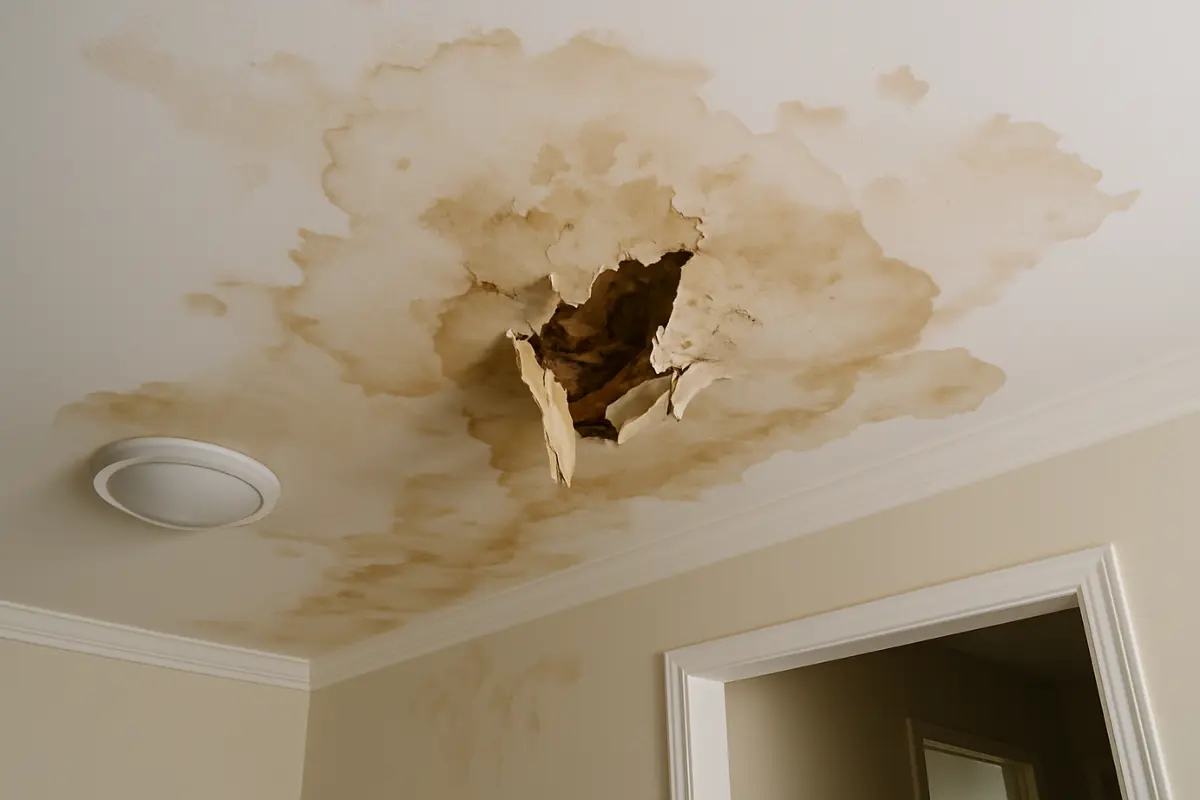
Move what’s below it. Furniture, electronics, anything absorbent. Water spreads along the ceiling before it drops.
- 2
Contain the water. Buckets, towels, a tarp on the floor. Empty containers before they overflow.
- 3
If the ceiling is bulging, puncture it. A small hole at the lowest point with a screwdriver drains the pocket into a bucket. A bulging ceiling that lets go all at once does far more damage and can injure someone.
- 4
Kill power to affected rooms at the breaker if water is anywhere near fixtures, outlets, or the ceiling fan.
- 5
Photograph everything, with timestamps. Interior damage, the water path, the contents affected. Do this before you clean up — the insurance claim depends on it.
- 6
Do not go on the roof. Wet roofs are the leading cause of homeowner falls, and a storm-damaged roof may have compromised decking underneath.
How emergency tarping actually works
A tarp is a controlled temporary waterproofing measure. It is not a sheet thrown over a hole.
Done correctly, an emergency tarp is a short-term roofing detail with a defined service life. The material is heavy-duty reinforced poly, not a hardware-store painter’s tarp. Where the roof geometry allows, it is run over the ridge and down the opposite slope, so there is no top edge for water to get under. Water always finds an unsealed upper edge.
It is secured with furring strips — wood battens screwed through the tarp into the roof decking — with the tarp edges rolled around the strips and sealed. That is what keeps it attached in wind. It is not nailed loosely at the corners and it is not held down with sandbags, tires, or bricks, which is the method that shows up in most of the failures we get called to replace.
The honest tradeoff: a properly installed tarp puts screw holes in your roof. That is accepted practice, and here is the reasoning. Those penetrations sit inside the area that is about to be repaired or replaced anyway, so they are removed along with the damaged material. A tarp that blows off during the next storm costs far more than a few screw holes — you get a second round of interior damage, at night, with no protection in place and no one watching.
A correctly installed tarp lasts 60 to 90 days in Central Texas conditions. That is deliberate: it is roughly the window needed to get an adjuster out, get the claim decided, and get permanent work scheduled. Weighted or unsecured tarps typically fail in the first significant wind event, often within days.
What insurance covers, and what it needs from you
Emergency mitigation is generally a duty under your policy, not a favor you are asking for.
Most homeowner policies contain a provision requiring you to take reasonable steps to prevent further damage after a covered loss. That cuts in your favor here. Because mitigation is something you are obligated to do, the cost of doing it — emergency tarping, board-up, water extraction — is typically reimbursable, and you do not need your carrier’s prior approval before acting. Waiting for permission while water runs is the wrong move on both the damage and the claim.
Reimbursement, though, depends almost entirely on documentation. Three things matter:
- Dated photographs taken before mitigation. Once the tarp is on and the carpet is dry, the evidence of what happened is gone. Photograph the damage, the water path, and the affected contents before anyone covers or cleans anything.
- An itemized emergency invoice, separate from the permanent repair. Adjusters process emergency mitigation on a different track than repair scope. Bundled into one estimate, it frequently gets absorbed or questioned. We invoice emergency work separately for exactly this reason.
- Prompt notice to the carrier. Two clocks start at the date of loss: your policy’s own notice provision, commonly around a year but varying by carrier and policy form, and the two-year limitations period Texas law sets for suing an insurer on a claim. Neither is a universal rule, so read your policy — but report promptly regardless, because evidence degrades faster than either deadline runs.
More detail on how carriers evaluate roof claims, and where claims commonly fall apart, is on our insurance claims page.
What counts as an emergency
Being clear about what is not an emergency matters as much as the list of what is. Emergency rates should be paid for emergencies.
Every hour it runs, it moves further into insulation, drywall, and framing.
Bare decking is unprotected. The next cell turns an exterior problem into an interior one.
The limb may be holding load or resting on decking that is already broken.
A lifted panel edge is a lever. The next gust takes the panel and often its neighbors.
It still needs diagnosing, but it does not need a crew tonight at emergency rates.
Real, but not urgent. Start with a free roof inspection and a written condition report.
After the tarp: what happens next
The tarp is the first hour. This is the next few weeks.
- 1Documented inspection and written scope
Once the building is dry, the roof gets a full assessment — every slope photographed, the attic checked from below, and the actual entry path identified rather than assumed.
- 2Claim filing decision
We give an honest read on whether a claim is worth filing. Sometimes the damage is real and clearly covered. Sometimes the repair costs less than the deductible, and filing costs you more than it returns. See hail damage and storm damage for how each is evaluated.
- 3Permanent repair or replacement scheduled
The tarp buys 60 to 90 days, not a season. Within that window the roof gets a targeted repair or a full replacement, depending on what the inspection found.
- 4Emergency invoice submitted for reimbursement
The itemized emergency invoice goes to your carrier as a separate document, with the dated pre-mitigation photographs attached, so it can be processed on its own rather than buried inside a repair estimate.
Emergency response by area
Same-day emergency tarping across the San Antonio metro and the I-35 corridor.
Uniform builder roofs and long west-facing slopes that peel first in straight-line wind.
Alamo Ranch roofing guideSteep pitches and mature canopy — tree impact is the most common emergency call here.
Bulverde roofing guideMetro-wide same-day response, with active interior water triaged ahead of everything else.
San Antonio roofing guideLarge cohorts of same-age builder roofs, so one storm generates a lot of simultaneous calls.
New Braunfels roofing guideMetal and tile rooflines where a lifted panel or slipped tile needs securing, not just covering.
Boerne roofing guideFlat, open exposure with little wind break — wind-lifted shingle fields are the usual damage.
Cibolo roofing guideAfter a widespread storm, response times stretch — everyone in the affected area calls the same week, and no local crew has surge capacity for that. We triage rather than queue: active interior water goes ahead of exterior-only damage, every time.
The permanent repair is warranted in writing for 12 months
Every repair Atrium performs carries a written 12-month workmanship warranty. It covers the workmanship of the repair we did. If that repair does not hold the way it should, we come back out and put it right.
One thing worth being clear about: the warranty covers the repair we performed, not the condition of the rest of your roof. If your roof is twenty years old and we reflash a chimney, the chimney work is what we stand behind. The rest of the roof keeps aging at its own pace, and we will tell you honestly where it stands.
It is not insurance. It does nothing for storm, hail, or wind damage, which is what an insurance claim is for.
Emergency roof repair FAQs
Let's get your roof stabilized today.
No pressure, no obligation. Calls answered 24/7 in English & español by Alex, our AI specialist · Get an engineer-led 53-point roof inspection, not a sales pitch.