Jose Puente
Civil Engineer. Owner of Atrium Roofing since 2016. 20+ years in construction.
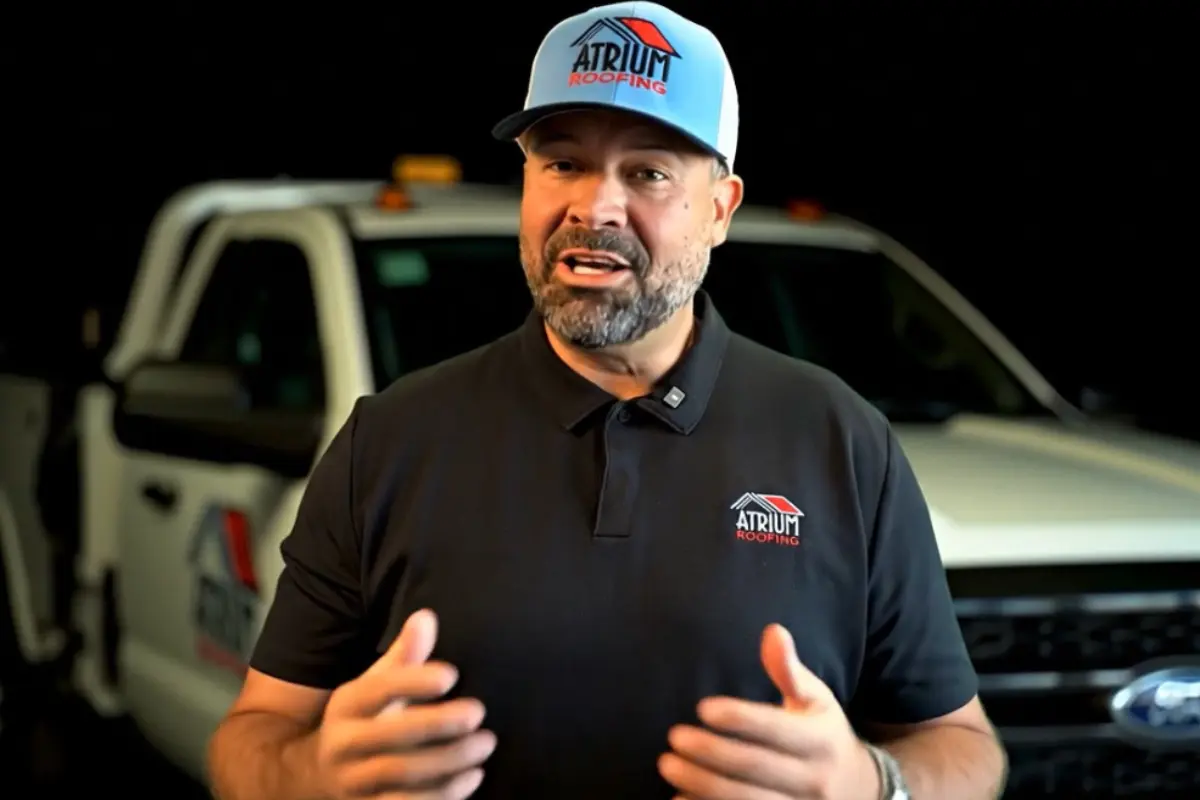
Jose Puente is a civil engineer and the owner of Atrium Roofing, which he has run since 2016. He brings more than 20 years of construction experience to a trade that, for most buyers, is close to impossible to verify.
That verification problem is the reason an engineer ended up running a roofing company. A roof is assembled in layers, and each layer is covered by the next one as the work proceeds. By the time the job looks finished, nearly everything that determines how long it lasts — deck condition, underlayment, flashing detail, ventilation — is out of sight. A homeowner is left judging the work by how the shingles look from the driveway, which tells them almost nothing.
The engineering answer is not a better sales pitch. It is documentation. Specify the assembly by name, calculate the things that can be calculated, photograph what gets covered up, and hand the homeowner a record they can hold anyone to — including us. A roof treated as an engineered system can be checked. A roof sold as a product cannot.
Atrium serves San Antonio and Central Texas, and every technical scope the company proposes follows the engineering standard Jose built.
What “engineer-led” actually means here
It is an easy phrase to claim, so here is what it cashes out to. Every item below is something you can ask us to produce.
An adjective is not a standard. These are the practices behind the term, written so a homeowner can check whether they happened rather than take our word that they did.
Not just the slope with the problem. All of them, labeled by orientation, so you can see the condition of the roof you did not climb — including the west and southwest slopes that age fastest here.
Net free area is calculated for intake and exhaust rather than defaulting to a ridge vent because the last roof had one. You can ask for the number. There should be one.
Flashing details at chimneys, walls, and penetrations are specified and rebuilt. Sealant over a bad detail is a countdown, not a repair.
Manufacturer and product for each layer of the assembly — underlayment, starter, field, ridge, and metal. Named products are what make two bids comparable. Generic line items are what make them not.
Every replacement scope Atrium proposes follows the engineering standard Jose set.
Credentials
Education and experience
- Bachelor of Science in Civil Engineering
- 20+ years of construction experience
- Owner of Atrium Roofing since 2016
Manufacturer and industry certifications
Compliance: the Texas laws that govern roofing work
Roofing licensure in Texas works at the city level, not the state level
Texas issues no statewide roofing contractor license — there is no state exam and no state board for the trade. What does exist is local: many municipalities, including cities across the San Antonio metro, require contractor registration or licensing at the city level, and permits are issued under those local rules. A contractor who cannot register and pull a permit in your city has told you something important.
Because the state-level gap leaves enforcement thin and inconsistent across jurisdictions, the signals that carry the most weight are manufacturer certifications — which require training, pass installation audits, and can be revoked — along with insurance and a verifiable local track record. That state-level gap is also why storm-chasing crews move so freely here: there is no statewide license for the state to pull.
HB 2102 — the deductible law
Passed by the 86th Texas Legislature and effective September 1, 2019, HB 2102 is codified at Texas Business & Commerce Code §27.02. It makes it an offense for a contractor to pay, waive, absorb, rebate, or otherwise decline to charge the insurance deductible on a property insurance claim, and it requires contracts to state in writing that the homeowner is responsible for paying the deductible.
Atrium's contracts carry that written notice, and we will never offer to cover a deductible. A contractor who does is not offering a discount — they are asking the homeowner to participate in an offense. We wrote up the statute in full on our Texas roofing deductible law page.
Roofing contractors cannot act as public insurance adjusters
Under the Texas Insurance Code, a roofing contractor may not act as, or advertise as, a public insurance adjuster on a property they are contracted to repair. That is the dual-role prohibition, and the line is clear in practice.
We can inspect the roof, document the damage, produce a written scope, meet the adjuster on the roof, and explain what we find. We cannot negotiate your claim or represent you to your carrier. That is a consumer protection, not a limitation: it keeps the party being paid for the repair from also deciding what the repair is worth. A contractor promising to "handle your claim for you" is describing something they are not permitted to do.
These are the rules that actually apply in Texas, and a homeowner can verify all three independently.
How to hold us to it
Questions worth asking Jose, anyone at Atrium, or any other contractor you are considering.
- Ask to see photographs of every slope, not only the one with the damage.
- Ask what the ventilation calculation was, and what net free area it produced.
- Ask which specific manufacturer and product is in the quote for each layer.
- Ask under what conditions the recommendation would be to do nothing at all.
- Ask who reviewed the technical scope before it was handed to you.
These are reasonable questions with concrete answers. Any response that dodges them is itself an answer.
Questions homeowners ask
Documented inspection, named products, and an honest recommendation — including when the recommendation is to wait.