Wind & Hail-Resistant Roofing in San Antonio, Engineered for Central Texas
A complete, engineered roofing system built around SBS-modified polymer asphalt shingles — the same UL 2218 Class 4 rating as IMPACTSHIELD™, reached through a different material-science path.
The same Class 4 rating, a different engineering path.
STORMLOCK™ is what FOUNDATION™ becomes when the roof covering steps from Class 3 to Class 4 through SBS-modified rubberized asphalt.
Important distinction: Malarkey makes a shingle called Legacy, and it is one of the two representative component options within STORMLOCK™. It is unrelated to Atrium's own LEGACY™ engineered system, which is a separate product family and will have its own page when it is published.
Every Atrium engineered system is specified as a whole assembly, not a shingle. STORMLOCK™ keeps that same structure: underlayment, ice and water barrier, starter course, flashings, matching same-manufacturer ridge, and balanced attic ventilation. What changes is the impact-rated shingle, and specifically how that shingle earns its Class 4 rating.
Some Class 4 products use an enhanced backing layer or a stronger mat. The STORMLOCK™ representative products use SBS-modified polymer asphalt — essentially rubberized asphalt — to give the shingle more flexibility under repeated hail and thermal cycling. That is a real materials difference, not a marketing claim. We state it plainly because homeowners who have watched a prior roof crack or lose granules under Central Texas hail often care about that behavior, not just the lab rating.
Who it's for
Homeowners who want a Class 4 impact rating but specifically prefer the rubberized asphalt engineering path — often because they have seen cracking or brittle damage on a previous roof and want the material response that SBS modification is designed to provide. It is also a sensible option for homeowners whose carriers document a Class 4 roof for wind-and-hail premium discounts. If you are comparing the two Class 4 paths Atrium offers, the side-by-side comparison lives on our IMPACTSHIELD™ system page and in our Class 3 vs Class 4 article. The rest of the range is FOUNDATION™ at the Class 3 baseline, LEGACY™ for hail-specific engineering, and THERMALGUARD™ for energy performance.
What a STORMLOCK™ roof is made of
This is a representative configuration, not a fixed spec sheet. Component selection varies by project, and the exact list is written on your proposal before anything is ordered.
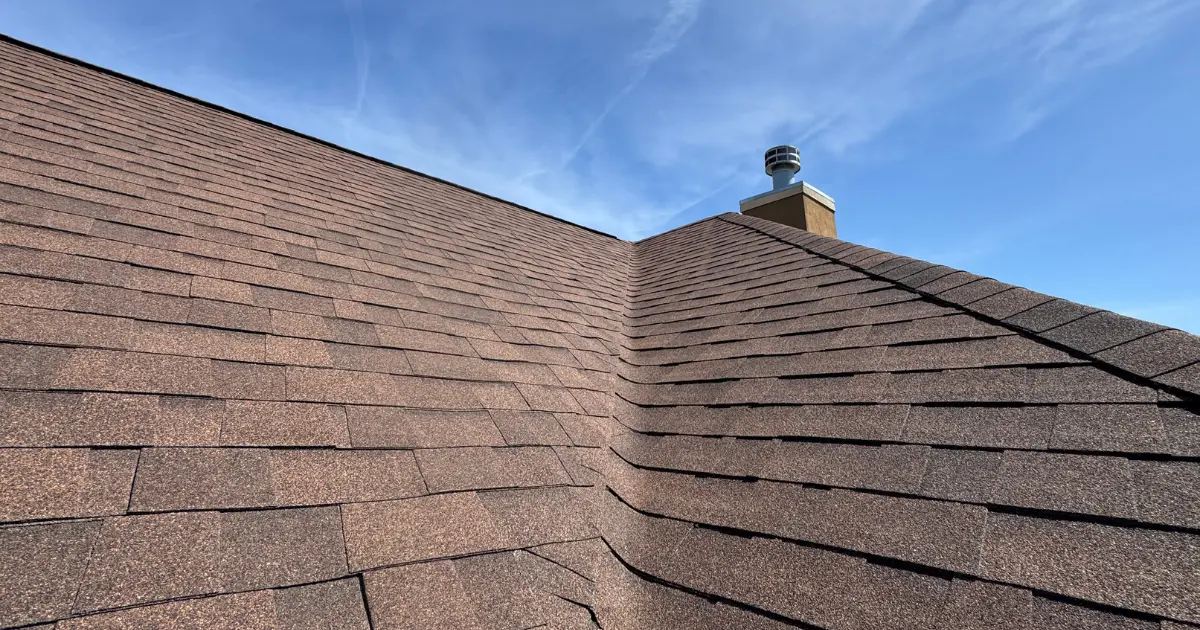
The primary roof covering is a UL 2218 Class 4 impact-rated shingle built with SBS-modified — rubberized polymer — asphalt. Representative options are GAF Timberline ArmorShield II and Malarkey Legacy — both independently UL 2218 Class 4 rated per their manufacturers' current data sheets, and both achieve their rating through the rubberized asphalt itself rather than an added backing or mat layer.
Same-manufacturer hip and ridge, not a cut-up field shingle. It is part of the component minimum a manufacturer requires before it will register an enhanced system warranty, and it is standard on every Atrium engineered system.
Balanced intake and exhaust sized to the attic, on every install. Under-ventilated attics age shingles from underneath, which is why ventilation sits inside the system rather than beside it as an add-on.
Underlayment, ice and water barrier, starter course, and flashings follow the same five-layer system described in “The system, not the shingle” on our roof replacement page. Same layers, same standards — STORMLOCK™ does not change them.
The GAF Timberline ArmorShield II and Malarkey Legacy shingles used here can also serve as eligible components toward an IBHS FORTIFIED Roof™ requirement at the shingle level. Full FORTIFIED Roof certification is a separate process that evaluates the whole roof assembly and requires an IBHS-recognized inspection; we do not represent that every STORMLOCK™ install goes through that full certification.
Price a STORMLOCK™ roof from your address
We measure your roof from aerial imagery and apply the STORMLOCK™ per-square rate. No email or phone number needed to see the number.
Pick a system and enter the property address. We return roof area in squares, including waste, and the installed cost range that area implies at our published rates. Nothing is gated behind a contact form.
What the SBS-modified path actually costs — and earns back
The STORMLOCK™ premium over FOUNDATION™ is a bounded, published number. The discount side depends on your carrier — so here's the math, not a promise.
vs. FOUNDATION™, our Class 3 baseline, for a typical San Antonio single-family roof.
Many carriers offer a wind-and-hail discount for a documented Class 4 roof — amount depends entirely on your carrier and policy. See how the paperwork works.
the top tier Underwriters Laboratories assigns.
What this roof could be worth to you — in your numbers
Enter numbers from your own policy. This is an illustration, not a forecast.
Enter yours from your policy.
Use the wind/hail line, not the all-peril line. Many Texas policies list it as a percentage.
Ask your agent for this in writing. This page covers a Class 4 roof.
Ask about a cosmetic damage exclusion. Some carriers apply one to roofs that receive an impact-resistant credit. It generally means they will not pay for hail marks that change how the roof looks but not how it performs. Ask your agent, and get the answer in writing before you decide.
Each replacement paid through insurance costs you one deductible. Pick the scenario you want to see.
Starting value is an illustration. Use your roofer's quote.
Enter your dwelling coverage and wind/hail deductible above.
Enter your agent's quote above to see this.
Pick how many replacements to model above.
Premium savings from the discount you entered, plus skipped deductibles from the scenario you picked.
Ask about a cosmetic damage exclusion. Some carriers apply one to roofs that receive an impact-resistant credit. It generally means they will not pay for hail marks that change how the roof looks but not how it performs. Ask your agent, and get the answer in writing before you decide.
What this leaves out
- Roof prices that rise over time.
- How filing claims can affect your premium.
- Anything your policy does not cover.
- Rules that are specific to your carrier.
Class 4 impact-resistant shingles can qualify for a premium discount in Texas. The amount is set by your insurance carrier, so ask your agent what yours would be.
Why roof age changes what insurance pays
A $10,000 roof on a house insured for $200,000 with a 2% ($4,000) deductible:
| Roof age | Roof's value | Minus deductible | Policy pays |
|---|---|---|---|
| 5 years | $8,500 | −$4,000 | $4,500 |
| 10 years | $7,000 | −$4,000 | $3,000 |
| 20 years | $4,000 | −$4,000 | $0 |
Source: Texas Department of Insurance example, as published by TDI.
On actual-cash-value policies, payments fall as the roof gets older. Some policies use a roof payment schedule instead, and that varies by carrier. A new roof starts at age zero.
How to claim a credit
- At closeout, you get the impact-resistant certification when it applies to your system. See the Power Package.
- Send it to your agent. Ask them to apply the credit in writing.
- Ask the cosmetic-exclusion question before you sign anything.
What the Class 4 test actually is
To earn a Class 4 rating, a shingle has to survive UL 2218's steel ball test: a 2-inch solid steel ball dropped from 20 feet, twice on the same spot. The shingle passes if there's no cracking, tearing, or rupture on the underside — UL 2218 measures functional damage, not cosmetic appearance.
Both GAF's Timberline ArmorShield II and Malarkey's Legacy reach Class 4 through SBS-modified, rubberized polymer asphalt built into the shingle itself, not an added backing layer or reinforced mat. That's the same engineering path for both representative options here — which is why STORMLOCK™'s two choices behave more like each other under repeated hail and thermal cycling than IMPACTSHIELD™'s three do.The impact-resistant certification your carrier needs to apply a discount is one of the documents in your Power Package — ready to give to your agent.
No voicemail. Alex has a real conversation about the problem and gets it to our team.
The manufacturer's warranty first. Ours underneath it.
A manufacturer-backed system warranty ranks above any contractor's own warranty for one reason: it survives the contractor. If a roofing company closes, changes hands, or simply stops answering the phone, a warranty backed by Owens Corning or GAF is still honored. A contractor's warranty is only worth as much as the contractor still being in business, and that is as true of ours as it is of anyone's.
Atrium holds Owens Corning Platinum Preferred, the top tier of the Owens Corning contractor network, which makes the enhanced Owens Corning system warranty available on our installs. We also hold GAF Certified Plus, which makes the GAF Silver Pledge available. These system warranties cover material and, at these tiers, workmanship, and they are registered with the manufacturer in your name.
These are contractor-certification-tier warranties, not shingle-tier ones, so the ceiling available does not change because the engineering path to Class 4 is different.
GAF Timberline ArmorShield II installs
Eligible for the GAF Silver Pledge, available because Atrium holds GAF Certified Plus. We do not offer the Golden Pledge — that requires GAF Master Elite certification, which we do not hold. The tier-by-tier difference is explained on our brands and certifications page.
Malarkey Legacy installs
Eligible for the Malarkey Certified Pro Warranty, available at Emerald Pro standing, available because Atrium holds the Malarkey Emerald Pro certification. It requires a complete Malarkey Secure Choice™ roof system — the shingles installed together with Malarkey's own accessories — rather than the shingle alone.
Atrium's workmanship layer
Atrium backs every roof replacement with a written 10-year workmanship warranty. It is non-prorated, so coverage in year ten is identical to year one, and it is fully transferable to the next owner. If a covered installation defect appears, we cover the labor and the materials to correct it.
The warranty covers the roof replacement we performed. It is our installation of your new roof system that carries the ten years.
It covers our installation, and that is all it covers. It is not insurance and it does nothing for hail, wind, or anything else an insurance claim would handle. The manufacturer's warranty on the shingles themselves is a separate document.
If you want the mechanics behind all of this — how the two documents differ, what quietly voids them, and how the certification tier decides which one can be registered — our roof warranty guide walks through it.
Whichever warranty applies to your system is registered in your name and delivered as part of the Power Package — up to five documents, depending on your roofing system; on a shingle system that includes the supplier's material invoice.
Why the material path matters in this climate
San Antonio and the surrounding Hill Country do not just get hail. They get thermal cycling — hot attic, cool rain, rapid temperature swings — and that repeated stress can make a stiffer shingle crack before a large hailstone ever arrives. SBS-modified asphalt is designed to absorb that flex without cracking the way a more conventional asphalt might. That is the practical advantage homeowners notice: not a higher UL number, but a shingle that holds together under the kind of daily wear that comes with the climate.
Class 4 is still Class 4. Both STORMLOCK™ and IMPACTSHIELD™ cap at the same UL 2218 tier because the standard does not go higher. The difference is the engineering behavior underneath the rating. For homeowners who have had a prior roof fail by cracking, granular loss, or brittle fatigue rather than by a single catastrophic puncture, the SBS-modified path is often the more relevant upgrade.
What we will not say is that any Class 4 roof is hail-proof. The manufacturers' own disclaimers are clear that lab impact testing does not perfectly correlate with real-world hail. Class 4 is the highest documented protection available. It is not immunity.
STORMLOCK™ FAQs
Let's spec the right system for your roof.
No pressure, no obligation. Calls answered 24/7 in English & español by Alex, our AI specialist · Get an engineer-led 53-point roof inspection, not a sales pitch.