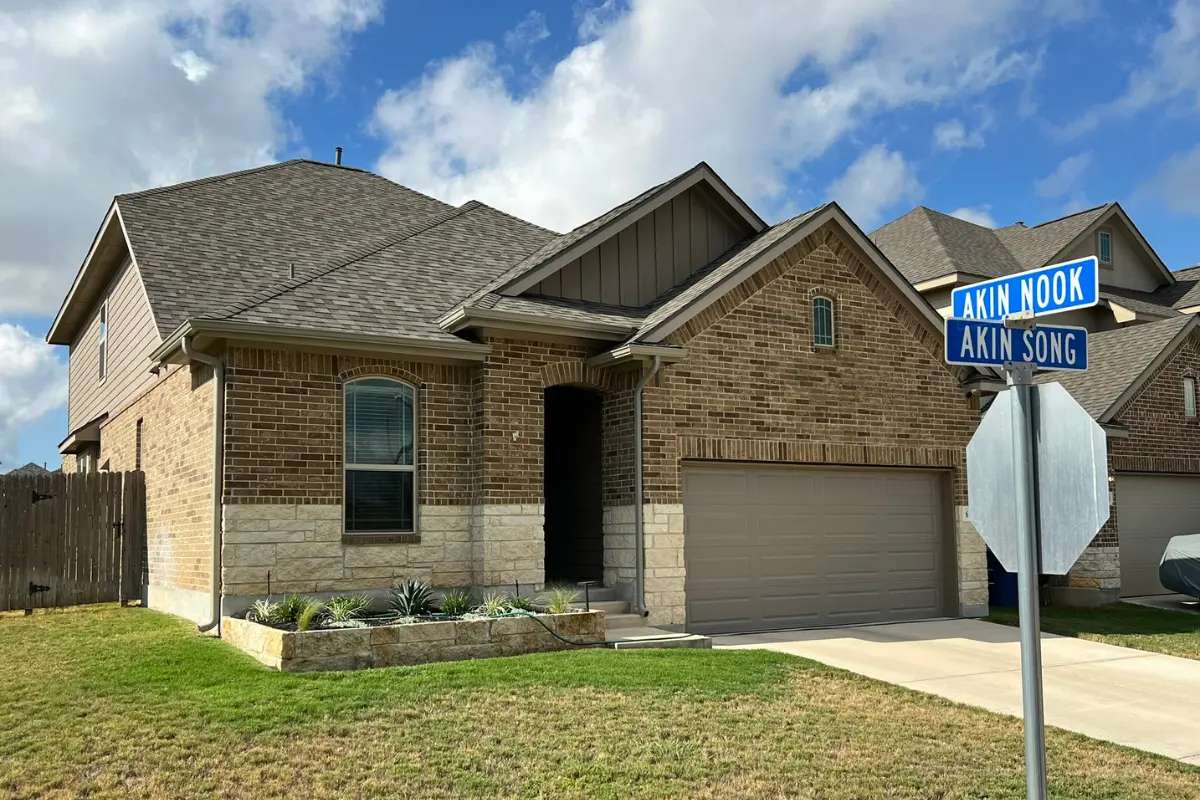
Atrium Roofing crew installing an engineer-led roofing system on a San Antonio residence.
Wilson County · Southeast of San Antonio · Roofing knowledge center

The Complete Roofing Guide for Floresville

Floresville has two roofing problems, not one. In-town homes on blackland clay move with the seasons and crack their flashings, while rural acreage carries barns, workshops, and equipment sheds that are a different assembly priced a different way.
Local introduction

Roofing in Floresville, and why it isn't like anywhere else

Floresville is the seat of Wilson County, about thirty minutes southeast of San Antonio down US-181. It was an agricultural town first and is now absorbing metro spillover, and that history shows up directly in the work. Half of what we do here is conventional residential reroofing on smaller in-town lots. The other half is on rural acreage where the house is only one of three or four roofs on the property.

Those are genuinely different services. A residential reroof is a ventilated attic assembly with underlayment, flashings, and a warrantable shingle system. An equipment shed is exposed- fastener metal on purlins with no attic, no ventilation requirement, and minimal edge detail. Quoting them as one number hides what you are buying, so we price them as separate line items and explain what each one includes.

Climate & weather

How Floresville weather actually loads your roof

Open flat terrain southeast of the metro means nothing shades the roof and nothing slows the wind. Underneath it is blackland clay that moves every season.

Expansive blackland clay
Wilson County clay swells in wet months and shrinks hard in drought. The slab moves, the chimney and wall flashings separate, and gutter discharge next to the foundation makes the movement worse.
Full-day unobstructed UV
Little mature canopy on open lots. Shingle surfaces run past 150°F through the summer and the volatiles cook out of the asphalt faster than on shaded metro roofs.
Unobstructed wind across open terrain
No neighboring tree lines or dense subdivisions to break the flow. Ridge caps, rakes, and eave starter strips take the loads first.
Hail off the southern storm track
Less frequent than the I-35 corridor but real, and open exposure means the whole roof gets hit rather than parts of it being shielded.
Long dry spells followed by heavy rain
Drought opens soil cracks and separates flashing joints, then the first heavy rain finds every one of them at once.
Metal outbuildings in a corrosive farm environment
Fertilizer, livestock, and equipment chemistry accelerate corrosion at fastener penetrations on exposed-fastener panels.
Common problems

What we see most often on Floresville roofs

Chimney and wall flashing separation from soil movement
The most common in-town leak. The structure moves seasonally, the counter-flashing joint opens, and water enters at the masonry line rather than through the field of the roof.
Gutter discharge at the foundation
On expansive clay, water dumped at the slab edge is a structural problem, not a landscaping one. Uneven wetting drives differential movement that comes back as roof flashing failure.
UV-driven granule loss and sealant failure
Open-lot roofs lose their surface faster. Once granules go, the mat is exposed and shingles curl and lose their seal to the course below.
Exposed-fastener screw and washer failure on outbuildings
The neoprene washers on exposed-fastener metal panels harden and shrink in about 10 to 15 years under this UV. Thousands of small leaks appear at once.
Wind damage at ridges and rakes
Open terrain and no windbreak means uplift concentrates at edges. Lifted ridge caps and peeled rake courses are typical after a strong front.
Undersized or damaged gutters on long low roof runs
Ranch-profile homes with long eave runs need correct downspout spacing. Builder-standard systems overflow and drop water right where the clay is most sensitive.
Diagnosing something specific? Our roof problem guide walks through leaks, granule loss, sagging, and ventilation failures step by step.
Engineer's perspective

Why roofs actually fail — from a systems point of view

Atrium Roofing is engineer-led. Here's how we think about your roof as a system, not a stack of shingles.

The engineering issue in Floresville is water management at ground level as much as on the roof. On expansive clay, where roof water lands determines whether the soil under the slab wets evenly or unevenly, and uneven wetting drives the seasonal movement that cracks the flashings we then get called to repair. Treating a recurring chimney leak without fixing the discharge routing is treating the symptom.

Flashings get engineered, not patched

A structure that moves annually needs flashing joints designed to tolerate movement: two-piece counter-flashing at masonry with a reglet cut and sealed, step flashing on every course at wall lines, and kickouts where a wall meets a lower roof. Caulk over a moving joint is a one-season repair, and we will say so rather than sell it.

Outbuildings are a separate service line, priced separately

Barn, workshop, and equipment shed roofs are typically exposed-fastener metal on purlins with no deck and no attic. There is nothing to ventilate, edge detail is minimal, and the entire service life of the assembly is governed by the fasteners rather than the panels. When the panels are sound, a full re-screw with larger-diameter fasteners and fresh washers is usually the correct recommendation instead of replacement — and it costs a fraction of a new roof. We quote outbuildings as their own line item so you can see that plainly.

UV is the clock on an open-lot residential roof

Without canopy, the limiting factor on shingle life here is thermal cycling and UV, not impact. That pushes us toward higher-quality asphalt with better sealant chemistry and toward genuinely balanced attic ventilation, because attic temperature drives shingle temperature from below at the same time the sun drives it from above.

Repair, replace, or claim

Three paths, and how to know which one fits

Roof Repair
When damage is isolated — a failed pipe boot, a wind-lifted ridge cap, a valley leak on an otherwise healthy Floresville roof — a targeted repair is almost always the right call. Expect $400–$2,500 for most residential repairs, with a written scope so you know what's being touched and what's being left alone.
See Floresville Roof Repair Options
Roof Replacement
Once a roof is past 18–20 years, has multiple leak points, or shows widespread granule loss and decking softness, a full system replacement wins on cost per year of service. See our full replacement guide.
View the Full Floresville Roof Replacement Guide
Storm Damage
Hail, straight-line winds, and tree impact from Central Texas storms may qualify for an insurance-funded replacement. We inspect first, document with photos, and only recommend a claim when damage is genuinely functional — never cosmetic.
Report Floresville Roof Storm Damage
Ballpark costs

What roofing actually costs in Floresville

Floresville prices at or slightly below metro production baseline for residential work — simpler rooflines, easier access, competitive local market — with agricultural outbuilding metal quoted separately. Ranges are 2026 figures. These are ranges based on typical local jobs, and the actual number depends on your roof.

Small repair
$400 – $1,000
Pipe boot replacement, ridge cap section, minor flashing patch, wind-lifted course repair.
Mid repair
$1,000 – $3,400
Two-piece chimney counter-flashing rebuild, wall step flashing with kickouts, valley repair.
Architectural reroof (2,000 sq ft roof footprint)
$11,500 – $14,500
Full tearoff, synthetic underlayment, all new flashings, balanced ridge and soffit ventilation.
Class 4 impact reroof
$13,300 – $16,900
UL 2218 impact-rated system with certification documentation for your carrier's premium discount.
Agricultural outbuilding metal (separate line)
$4.50 – $9.00 / sq ft
Exposed-fastener 26-gauge on purlins, no deck or ventilation. Full re-screw of sound existing panels typically $1.75 – $3.25 / sq ft.
6-inch seamless gutters (full house)
$1,900 – $4,000
Aluminum with 3x4 downspouts and extended underground or surface discharge well clear of the slab. Repairs typically $250 – $750.
How much would a new roof cost in Floresville?
Get an instant estimate
What moves the number
  • In-town residential versus rural acreage access and travel.
  • Number and size of outbuildings, and whether panels can be re-screwed rather than replaced.
  • Decking condition on older in-town homes, priced per sheet.
  • Chimney and wall flashing scope driven by soil movement history.
  • Gutter footage, downspout count, and discharge routing distance.
  • Impact rating and ventilation upgrades.
For a full breakdown by material, layer, and roof complexity, see the Central Texas roof cost guide. Compare shingles vs. metal vs. tile side by side in our materials comparison.
Financing

Paying for a roof without draining savings

Floresville totals are typically lower than metro custom work, and terms of 36–120 months cover most residential projects. Where a property has both a house and outbuildings, we quote them separately so you can phase the work — replacing the house roof this year and re-screwing the barn next year is a perfectly reasonable sequence, and we will tell you which one is actually urgent.

Wind and hail deductibles in Wilson County commonly run 1–2% of dwelling coverage. On a $300,000 dwelling limit at 2%, that is $6,000 out of pocket on an approved claim. Know that figure before a storm. Also confirm with your carrier whether detached outbuildings are covered under other-structures coverage and at what limit, because that is frequently a surprise after a hail event.

Full terms and monthly payment calculators live on our financing page. If a storm was involved, our insurance guide explains how deductibles and depreciation actually work.
Recommended systems

Roof systems that hold up in Floresville

These aren't the cheapest options — they're the ones that actually make it to their warranty on Central Texas roofs.

Two-piece counter-flashing at all masonry
On expansive clay the structure moves seasonally. A reglet-cut two-piece assembly tolerates that movement where a caulked one-piece flashing opens within a year.
High-temperature synthetic underlayment
Open-lot roofs with no canopy run extremely hot. Synthetic holds up to thermal cycling where felt dries, wrinkles, and tears at fasteners.
Balanced ridge and soffit ventilation
Attic heat drives shingle temperature from below. On a full-sun roof, correct intake-to-exhaust balance is one of the few levers that measurably extends service life.
Larger-diameter fasteners with new EPDM washers on outbuildings
Exposed-fastener metal fails at the screw, not the panel. Upsizing into fresh material during a re-screw restores a sound roof at a fraction of replacement cost.
6-inch seamless gutters with extended discharge
Getting roof water well away from the slab is a foundation measure on this soil, and foundation stability is what keeps the flashings intact.
Neighborhoods

Roof characteristics by Floresville neighborhood

Housing stock, roof age, and the failure modes we see most often, block by block.

Pre-1950s–1970s
Downtown Floresville historic district
Older stock with plank decking, complicated masonry chimneys, and multiple prior reroofs. Flashing detail and decking condition drive the scope.
2000s–2010s
Eagle Creek
Newer residential on smaller lots. First-replacement age with intact decking and simple rooflines — straightforward, competitively priced work.
2010s–2020s
Cordova Ranch
Recent production housing. Mostly warranty-age roofs where the honest answer is usually repair or wait, not replace.
1990s–2010s
River Bend
Mixed stock nearer the river with more canopy than the open lots. Debris in gutters and valleys becomes a factor here.
Varies
Rural US-181 corridor
Acreage properties with a house plus outbuildings. Nearly always a two-part scope: residential shingle plus exposed-fastener metal.
Varies
Rural FM 536
Open agricultural land, long driveways, and equipment structures. Access and staging affect scheduling as much as the roof does.
Local context

Around Floresville

A little context helps calibrate what a roof in this specific community faces.

Floresville sits on US-181 about thirty minutes southeast of downtown San Antonio, roughly a 35 to 45 minute drive depending on Loop 410 traffic. It is the Wilson County seat, and the county courthouse anchors the historic downtown square. The San Antonio River runs along the western edge of town, with River Road and the Floresville River Park following the corridor. La Vernia lies northeast on TX-97, Stockdale is southeast on US-87, and Adkins and Elmendorf sit back toward San Antonio along the 181 corridor. The terrain is open blackland prairie with expansive clay soil, minimal tree cover away from the river, and long unobstructed sightlines that translate directly into unobstructed wind and sun on the roof.
Floresville services

Roofing services we deliver in Floresville, TX

Two property types, two scopes. In-town residential on clay soil, and rural acreage where the house is one of several roofs.

Roof replacement in Floresville is a full tearoff with synthetic underlayment rated for high deck temperatures, new step and counter-flashing at every wall and chimney, ice-and-water membrane in valleys, and balanced ridge and soffit ventilation sized to the attic volume. On open-lot homes we usually recommend a Class 4 impact-rated system, both for hail and because the heavier mat tolerates thermal cycling better under full-day sun.

Roof repair in Floresville concentrates on flashing joints that have opened as the structure moved with the clay. Two-piece counter-flashing at masonry, kickouts at wall-to-roof terminations, valley repair, and boot replacement. Where we find that gutter discharge is feeding the soil movement, we say so, because repairing the flashing without fixing the water will just bring us back next year.

Agricultural and outbuilding roofing is a separate service line and a separate line item. Barns, workshops, and equipment sheds are typically exposed-fastener metal on purlins with no deck and no attic. Where panels are sound, we recommend a full re-screw with larger-diameter fasteners and new EPDM washers rather than replacement, and we will tell you plainly when that is the better value.

Storm damage roof repair after a hail or wind event starts with a free documented inspection covering the house and the outbuildings, since other-structures coverage limits are often lower than owners expect. Our hail damage guide explains how functional damage differs from cosmetic marking, and we will tell you honestly when a claim is not worth filing against your deductible.

Gutter installation and gutter repair matters more on this soil than almost anywhere else we work. Long ranch-profile eave runs need correct downspout spacing, and discharge has to carry water well clear of the slab. Our seamless gutter installation and repair guide covers sizing and discharge routing in detail.

Ventilation and attic performance work is one of the few levers available on a full-sun roof with no shade. Balanced intake and exhaust lowers attic and deck temperature, which slows the volatile loss that ends shingle life here. See our attic ventilation guide for the physics behind it.

Local conditions

What actually damages roofs in Wilson County

Clay below, sun and wind above, and nothing in between to shade or shelter the assembly.

Expansive blackland clay. Wilson County soil swells when wet and shrinks hard in drought. That annual cycle moves the structure, and the movement shows up at the rigid joints: chimney counter-flashing, wall step flashing, and anywhere masonry meets roof. It is the single most common source of in-town leaks here and the reason we treat water discharge at the foundation as part of the roofing scope.

Full-day UV with no canopy. Open lots mean nothing shades the roof at any hour. Surface temperatures past 150°F drive the volatiles out of the asphalt, granules release, and sealant strips lose their grip. Roofs here often reach end of life on the sun clock rather than on the storm clock.

Unobstructed wind. Flat open prairie gives wind a clean run at the house. Uplift concentrates at ridges, rakes, and eaves, so hand-sealed ridge caps, starter strip at every edge, and correct nailing patterns are baseline rather than upgrades.

Hail on the southern track. Less frequent than the I-35 corridor but genuinely present, and with no tree cover the entire roof takes the impact. On acreage properties, hail also hits outbuilding panels, which dent visibly but often remain functionally sound — a distinction worth getting right before filing.

Drought-then-deluge cycling. Long dry spells open soil cracks and pull joints apart, then the first heavy rain finds every opened flashing at once. That is why leaks here so often appear in clusters after the first real storm following a dry summer.

Service area

Floresville, TX — where we work

We serve in-town Floresville and rural Wilson County — the historic downtown district, Eagle Creek, Cordova Ranch, River Bend, and acreage along the US-181 and FM 536 corridors — roughly 35 to 45 minutes southeast of San Antonio.

Verified reviews

What homeowners actually say

Published, verifiable reviews from third-party platforms — not marketing copy.

4.9★ · 290+ Google Reviews · 60+ Yelp Reviews · 29 Verified GuildQuality Reviews · A+ Rated by BBB · 100% Would Recommend
"Atrium Roofing was very professional. I did my own research, and that's why I chose them. I talked to the owner, Jose, and he was very professional. I liked how they did business. They are a good, respectable business."
Ray J.
San Antonio, TX
Verified · GuildQuality
"Efficient estimate, provided support and guidance in understanding the roofing and insurance process."
Susan L.
San Antonio, TX
Verified · GuildQuality
"Great experience, from start to finish. Owner did 3 onsite visits. The General Manager made an onsite visit. The owner worked with my insurance adjuster directly. Always available to answer questions. He was very knowledgeable and patient with ALL of my many questions. The roofers even showed up a little early. Kept the area clean and, poof, they were done. Excellent. Would highly recommend."
Cheryl D.
San Antonio, TX
Verified · GuildQuality
Frequently asked

Floresville homeowner questions

Both, but we quote them as separate line items because they are different assemblies. Outbuildings are usually exposed-fastener metal on purlins with no deck and no attic to ventilate. Pricing, warranty, and scope all differ from a residential reroof.

Often not. Exposed-fastener metal fails at the screws, where the neoprene washers harden and shrink after 10 to 15 years. If the panels are sound, a full re-screw with larger-diameter fasteners and fresh washers restores the roof for a fraction of replacement cost.

Floresville is a routine service area for us. It is roughly a 35 to 45 minute drive from downtown San Antonio down US-181, and we work the full corridor including La Vernia, Adkins, and the rural FM 536 area.

Because the repair was caulk on a joint that moves. Wilson County blackland clay swells and shrinks seasonally, and the structure moves with it. The durable fix is a two-piece counter-flashing assembly with a reglet cut at masonry plus proper step flashing, all of which tolerate movement.

On expansive clay, dumping roof water at the slab edge wets that soil unevenly, which drives differential foundation movement, which separates the flashings. Extending discharge well clear of the structure is a roof-longevity measure here, not landscaping.

No canopy. Most Floresville lots have little shade, so shingles take full-day UV and run past 150°F all summer. Thermal cycling and UV, not impact, are usually what ends the life of a roof here.

Usually yes, though for a slightly different reason than in the hail corridor. The impact rating comes with heavier, more flexible mats that also tolerate thermal cycling better, and the carrier premium discount typically pays the upgrade back in five to eight years.

Send your carrier the manufacturer's UL 2218 Class 4 certification along with the final invoice showing the installed product. Carriers do not apply it automatically.

Usually under other-structures coverage, but at a limit that is a percentage of your dwelling coverage and often lower than owners expect. Confirm the limit with your carrier before a storm, not after.

Functional damage means a fractured shingle mat with granule loss down to the asphalt, plus dented soft metals like vents and gutters. Cosmetic marking that has not broken the mat is generally not claimable, and we will tell you when that is what we find.

Only if the documented damage clearly exceeds your deductible. We inspect at no cost, document with dated photos and measurements, and give you an honest read before you call your carrier. A denied or minimal claim still goes on your record.

On pre-1970s stock with plank decking, plan for some. Ten to twenty boards is common, more where there has been a long-running leak. We photograph every board we replace and price decking per sheet or board in the contract rather than as a surprise.

It can be, especially on simple ranch rooflines with long uninterrupted runs, which describes a lot of Floresville housing. Concealed-fastener standing seam is a different product from the exposed-fastener panel on your shed, with a much longer service life and a correspondingly higher price.

One to two days for a typical in-town home in asphalt. Rural properties with outbuildings run longer, mostly because of staging and access rather than roof complexity.

No. A layover hides the deck condition, adds weight, traps heat on a roof that is already running hot, and makes correct flashing detail impossible. We do full tearoff only and will not warranty anything else.

Requirements differ inside city limits versus unincorporated Wilson County. We confirm the applicable authority and requirement for your specific address before scheduling, and where a permit is required we pull it in our name.

Out-of-state plates and phone numbers, door knocking within days of a storm, pressure to sign an assignment of benefits on the spot, no permanent local address, and an offer to cover your deductible. Covering a deductible is insurance fraud in Texas.

General liability and workers' compensation certificates sent directly from the insurer, manufacturer certification for the system being proposed, a written scope that names products and includes flashing and decking line items, and whose name the manufacturer warranty is registered in.

Yes, with terms that commonly run 36 to 120 months on residential work. Where a property has both a house and outbuildings we quote them separately so the work can be phased sensibly.

A roof-side and attic-side inspection, dated photographs of every finding, moisture-driven decking assessment, flashing and ventilation evaluation, gutter and discharge review, and a written report with a repair-versus-replace recommendation you can hold us to.
Have a specific Floresville roof question?

Send a photo or address — we'll respond with an honest assessment, whether that's monitor, repair, or replace.